TL;DR:
- Fabric glue is a flexible adhesive used for no-sew curtain bonding, offering a clean, washable finish that lasts up to two years indoors. It provides advantages like no visible stitching, quick application, and flexibility, making it ideal for hems, trims, and decorative repairs on delicate fabrics. Proper technique, including surface preparation and full curing time, ensures a durable bond, while it remains unsuitable for high-stress seams or structural joins.
Fabric glue for curtains is defined as a flexible, specially formulated adhesive that bonds curtain fabric layers without sewing, producing a clean, washable, and durable finish. The method is the standard industry term for no-sew fabric bonding, and it gives homeowners and DIY decorators a reliable way to hem, trim, and repair curtains without a needle or thread. Permanent fabric glue formulas can last up to 2 years for indoor curtain applications. That durability makes fabric glue a genuine design tool, not just a temporary patch. Beautifulwindowselgin works with decorators at every skill level, and the question of why use fabric glue curtains comes up constantly among clients tackling their first window treatment project.
Why use fabric glue on curtains instead of sewing?
Fabric glue delivers several advantages that sewing simply cannot match for certain curtain tasks. The most visible benefit is a finish with no stitch bulk. Fabric glue avoids bulky stitching on delicate or sheer curtains, producing a clean hem that reads as professional from across the room. For jacquard satin or embroidered fabrics, where needle holes can distort the weave, this matters enormously.
The fabric adhesive advantages extend well beyond aesthetics. Application is faster than hand-stitching or machine sewing, which makes it practical for quick seasonal changes or last-minute installs. The bond remains flexible after curing, so the curtain still drapes naturally rather than pulling stiff at the hem. That flexibility is what separates true fabric glue from hot glue or craft glue.
Here are the core benefits that make fabric glue the preferred choice for specific curtain tasks:
- No visible stitching on sheer, delicate, or patterned fabrics
- Faster application than hand or machine sewing for hems and trims
- Flexible bond that preserves natural drape and fabric movement
- Accessible for non-sewers with no equipment or skill barrier
- Cost-effective for small repairs, decorative additions, and length adjustments
- Clean finish on curtain edges without fraying or raw seams
Pro Tip: Test your fabric glue on a scrap of the same curtain fabric before committing to the full hem. This confirms color compatibility and bond strength without risking your finished panel.
Fabric glue also works as a curtain customization tool for decorators who want to attach ribbon trim, appliqués, or contrast borders without disrupting the fabric surface. The result is a polished look that holds up through normal indoor use.

How to use fabric glue on curtains for a strong, lasting bond
Proper technique determines whether a fabric glue bond lasts weeks or years. The process requires patience and precision at every stage.
-
Prepare the fabric surface. Wash and dry the curtain panel before applying any adhesive. Fabric softeners and oils coat fibers and prevent the glue from penetrating. Iron the area flat so the bonding surfaces make full contact.
-
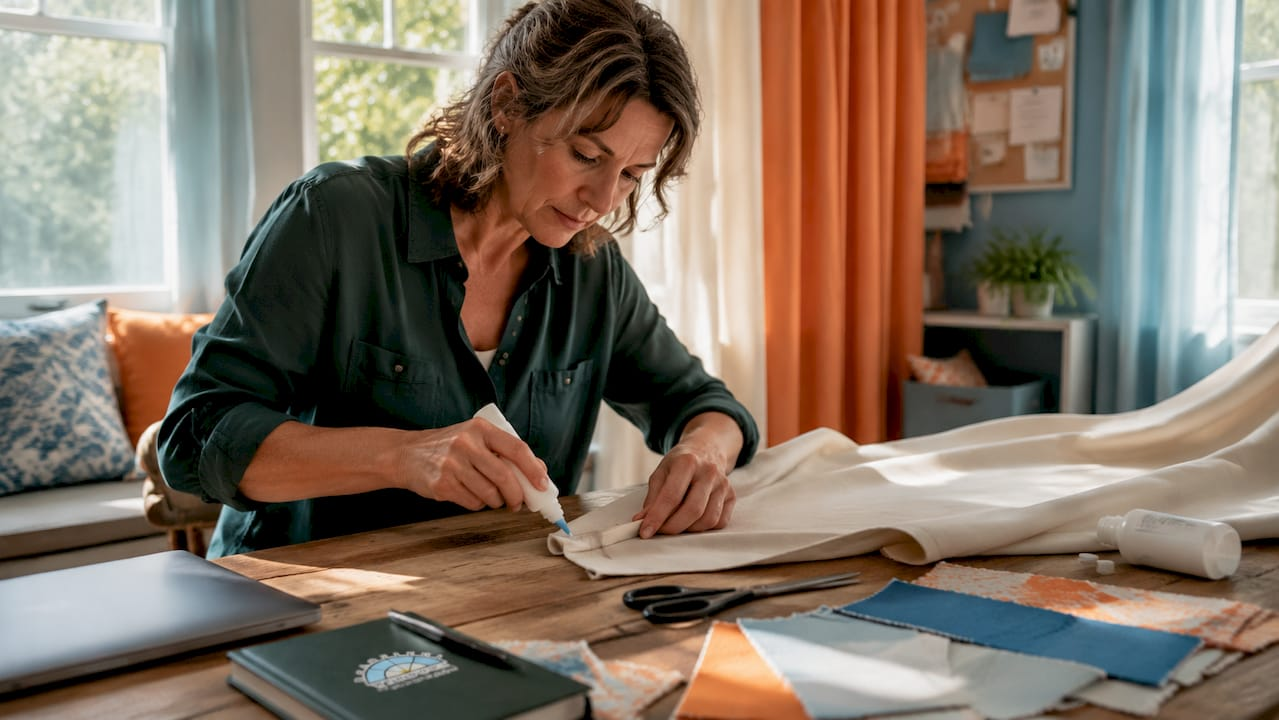
Apply a thin, even layer of glue. Excess glue causes seepage and stiff fabric; a thin, even layer produces the best flexible bond. Use the applicator tip or a small brush to keep the line controlled and consistent.
-
Press firmly and hold. Bring the fabric layers together immediately and press with steady, even pressure for 1–5 minutes. Use clamps, binder clips, or heavy books to maintain contact without shifting the fabric.
-
Allow a full 24-hour cure. Premature washing or handling before full cure is the leading cause of bond failure. Set the panel flat or hang it without tension while the adhesive cures completely.
-
Account for fabric type. Fabric glue cures more slowly on synthetic fibers like polyester, which repel moisture and slow adhesive penetration. Add extra curing time for polyester blends and avoid rushing the process.
-
Wash with care after curing. Turn the curtain inside out and use a gentle cycle with cold water. High heat in the dryer can weaken the bond over time, so air drying is the safer choice.
Environmental conditions affect drying time as well. Ideal conditions include 70–75°F with controlled humidity and even pressure applied for at least 30 minutes. Working in a cold or humid room extends curing time and increases the risk of bond failure.
Pro Tip: If you are working on a heavy linen or velvet curtain panel, apply glue in two thin passes rather than one thick layer. Let the first pass tack slightly before adding the second. The layered approach builds a stronger bond without the stiffness that comes from excess adhesive.

Reviewing a curtain fabric selection guide before starting your project helps you match the right glue formula to the specific fiber content of your panels.
What types of fabric glue work best for curtains?
Not all adhesives labeled “fabric glue” perform equally on curtain projects. The formulation determines flexibility, washability, and longevity.
True fabric glues remain flexible and washable after curing, while craft glue and hot glue stiffen the fabric or fail in the wash. Professional-grade fabric glues bond within fabric fibers rather than just on the surface, which maintains drape and aesthetics in window treatments. That fiber-level bonding is what makes them suitable for decorative curtain work.
| Glue type | Longevity | Washable | Best use |
|---|---|---|---|
| True fabric glue | Up to 2 years indoors | Yes, gentle cycle | Hems, trims, decorative bonds |
| Washable craft glue | Weeks to a few months | Limited | Temporary fixes, testing |
| Industrial waterproof formula | 2+ years, outdoor rated | Yes | Heavy-duty or outdoor curtains |
| Hot glue | Days to weeks | No | Display only, not washable |
Key criteria for selecting the right adhesive:
- Check the label for “flexible after cure” since rigid formulas crack when the curtain moves.
- Choose washable formulas for any curtain that will be laundered regularly.
- Select industrial or waterproof formulas for outdoor panels or high-humidity rooms like bathrooms.
- Match the formula to the fabric weight. Lightweight sheers need a thinner adhesive; heavy velvet or jacquard panels need a stronger bond.
Beautifulwindowselgin carries the Beacon Fabric Adhesive, a flexible-bond formula designed specifically for fabric applications where drape and washability matter. Always test any new adhesive on a fabric scrap before applying it to a finished curtain panel.
Are there situations where fabric glue is not the right choice?
Fabric glue is not a universal replacement for sewing. Industry guides confirm that fabric glue does not replace sewing for high-tension or load-bearing applications. Knowing where it falls short protects your curtain investment.
Situations where sewing remains the better method:
- Header tape and rod pocket seams that bear the full weight of the curtain panel
- Frequently washed curtains in kitchens or bathrooms where repeated laundering stresses the bond
- Stretchy or knit fabrics that shift during application and prevent even bonding
- Heat-sensitive synthetics that react poorly to adhesive chemicals
- Very heavy fabrics like lined velvet panels where the bond area cannot support the load
Improper application also creates visible problems. Applying too much glue causes stiffness and visible ridges along the hem line. If the fabric surfaces are not pressed flat before bonding, air pockets form and the bond peels at the edges. These issues are avoidable with careful technique, but they do occur when decorators treat fabric glue as a quick shortcut rather than a precision method.
The most practical approach combines methods. Use fabric glue for trims, decorative elements, and light hems. Use fusible tape or sewing for primary seams and structural joins. That combination gives you the clean finish of adhesive bonding where it shows and the strength of stitching where it counts.
Creative applications of fabric glue beyond basic hemming
Fabric glue opens up curtain customization options that go well beyond a simple hem adjustment. Decorators use it to attach ribbon trim along the leading edge of a panel, creating a tailored border without a single stitch. Appliqués, monograms, and fabric patches bond cleanly to curtain surfaces with the right adhesive formula.
Temporary applications are another strong use case. During a seasonal refresh, fabric glue lets you attach a contrast lining or a decorative valance without committing to permanent alterations. When the season changes, a seam ripper and a little warm water remove most washable formulas cleanly.
Combining fabric glue with fusible hem tape produces a particularly reliable no-sew result. The tape provides structure and heat-activated bonding; the glue reinforces the edges and prevents fraying. This two-method approach works well for window treatment projects where a polished edge is visible from both sides of the panel.
Fabric glue also solves the problem of adjusting curtain length without cutting. Fold the excess fabric to the back of the panel and bond it flat. The result is a clean floor-length drape with no raw edge and no visible alteration from the front. For rental homes or temporary installations, this approach is practical and fully reversible with a washable formula.
Key Takeaways
Fabric glue is the most effective no-sew method for curtain hems, trims, and decorative bonds when applied in thin layers, cured for a full 24 hours, and matched to the correct formula for the fabric type.
| Point | Details |
|---|---|
| Durability depends on formula | Permanent fabric glues last up to 2 years indoors; always match formula to the project. |
| Thin layers outperform thick ones | Excess glue causes stiffness and visible ridges; apply thin, even coats for a flexible bond. |
| Full cure is non-negotiable | Wait a full 24 hours before washing or handling to prevent bond failure. |
| Fabric type affects drying time | Synthetic fibers like polyester slow adhesive penetration and require longer cure times. |
| Glue works best on low-stress areas | Use fabric glue for hems and trims; rely on sewing for load-bearing seams and rod pockets. |
What I have learned from watching decorators use fabric glue
Marrion’s perspective:
The most consistent mistake I see is treating fabric glue as a speed tool. Decorators reach for it because they want to skip the sewing machine, and that is a perfectly valid reason. The problem is that skipping patience along with the machine is what causes failures. A bond that gets washed 48 hours after application instead of 72 hours is going to peel. That is not a product flaw. That is a process flaw.
What I find genuinely interesting is how fabric glue has shifted from a beginner’s workaround to a legitimate technique in professional drapery workrooms. Experts now treat fabric glue as a design tool requiring patience and precision, not a simple shortcut. That shift reflects real improvements in adhesive chemistry over the past decade.
My honest recommendation is to use fabric glue where it excels and sew where strength is required. The decorators who get the best results are the ones who understand both methods and choose deliberately. Experimenting on scrap fabric before touching a finished panel is not optional. It is the step that separates a clean result from a costly redo.
— Marrion
Quality fabrics make every fabric glue project work better
The adhesive is only half the equation. The fabric you bond matters just as much as the glue you choose.

Beautifulwindowselgin carries a curated selection of designer drapery fabrics sold by the yard, including jacquard satin, embroidered textiles, and upholstery-weight materials that bond cleanly with professional-grade adhesives. Each fabric is selected for quality, drape, and durability, which means your fabric glue project starts with a surface that holds. The store also offers design consultations and drapery installation guidance for decorators who want expert support alongside their fabric order. Nationwide shipping is available, and fabric samples are offered so you can test adhesive compatibility before committing to a full yardage purchase.
FAQ
What is fabric glue used for on curtains?
Fabric glue bonds curtain hems, attaches decorative trims and appliqués, and repairs small tears without sewing. It works best on low-stress areas rather than structural seams.
Is fabric glue permanent on curtains?
Permanent fabric glue formulas last up to 2 years indoors. Washable formulas provide a temporary bond that can be removed with water and gentle handling.
How long does fabric glue take to dry on curtains?
Initial tack sets within 1–5 minutes with firm pressure, but a full 24-hour cure is required before washing or handling the curtain. Synthetic fibers like polyester require additional drying time.
Can fabric glue replace sewing for curtains?
Fabric glue does not replace sewing for load-bearing seams like rod pockets or header tape. It excels for hems, trims, and decorative elements where tension is low.
What is the best way to apply fabric glue to curtains?
Clean and dry the fabric, apply a thin even layer of glue, press firmly for 1–5 minutes, and allow a full 24-hour cure before use. Avoid excess adhesive, which causes stiffness and visible ridges.
Recommended
- Curtain Fabric Selection Guide 2026: Pick Styles That Last 30% Longer – Designer Fabrics by the Yard | Drapery Making Services
- Curtain selection guide 2026: choose fabrics confidently – Fabric Store in Columbia, SC | Drapery Making Services
- Curtain fabric types: Choose perfect fabrics for style – Designer Fabrics by the Yard | Drapery Making Services
- 7 Essential Curtain Fabric Types List for Homeowners – Shop Designer Fabrics by the Yard | Curtains & Drapery