TL;DR:
- Velvet curtains insulate well, block light, and improve acoustics, making them ideal for formal, cool rooms. Linen curtains are lightweight, breathable, and suited to casual, sunlit spaces where natural light and relaxed style matter. Choosing fabric depends on room orientation, insulation needs, and aesthetic preferences, with layering offering versatile design options.
Velvet and linen curtains represent two opposite ends of the curtain fabric spectrum, each defined by distinct physical properties, performance characteristics, and design personalities. Understanding what is velvet versus linen curtain means comparing a dense, plush pile fabric that weighs between 250 and 600 grams per square meter against a breathable, loosely woven natural fiber that filters light rather than blocking it. The choice between these two curtain material types shapes how a room feels thermally, acoustically, and visually. Knowing the differences between velvet and linen curtains before you buy saves you from costly mistakes and ensures your window treatments actually serve the room they hang in.
What is velvet versus linen curtain: physical and aesthetic differences
Velvet is defined by its cut pile construction, where thousands of tiny fiber loops are sheared to create a dense, directional surface. That pile gives velvet its signature sheen, depth of color, and soft, plush hand feel. Linen, by contrast, is a plain or loosely woven fabric made from flax fibers, producing a textured, slightly coarse surface with a relaxed, organic appearance.

Weight separates these two fabrics immediately. Velvet curtains fall in the 250–600 gsm range, which gives them a heavy, structured drape that pools elegantly on the floor. Linen curtains are significantly lighter, which produces a softer, more casual drape with gentle movement in air currents.
Key physical traits of each fabric:
- Velvet: Dense pile, directional sheen, rich saturated color, heavy drape, minimal transparency
- Linen: Loose weave, matte texture, natural off-white to warm tones, relaxed drape, semi-transparent
One detail that surprises many homeowners is linen’s relationship with creasing. Linen’s creased look is an embraced design aesthetic rather than a flaw, lending an effortless, lived-in quality to a room. Expecting crisp, wrinkle-free linen panels will lead to disappointment. Accepting the natural texture is part of working with this fabric well.
Pro Tip: When hanging velvet curtains, always order fabric with the pile running in the same direction across all panels. Reversed pile creates visible color differences between panels, which reads as a defect under natural light.

Velvet suits formal, dramatic interiors where color saturation and visual weight are assets. Linen suits casual, airy spaces where softness and natural light are the priority. Understanding this aesthetic split is the first step in any curtain fabric comparison.
How do velvet and linen curtains perform for insulation and light control?
Velvet’s thermal performance is its strongest functional argument. High-quality velvet curtains with thermal lining can reduce heat loss by up to 25% in winter and reflect unwanted summer heat. That figure applies specifically to lined velvet panels. That level of insulation makes velvet a practical choice in rooms where energy efficiency matters, not just a decorative one.
Linen performs very differently. Its open weave allows air to circulate freely, which keeps rooms cooler in warm months but provides minimal thermal resistance in winter. Linen filters natural light beautifully, creating a soft, diffused glow rather than blocking it. For homeowners who want privacy without sacrificing daylight, linen delivers that balance naturally.
| Property | Velvet curtains | Linen curtains |
|---|---|---|
| Thermal insulation | High (up to 25% heat loss reduction with lining) | Low to moderate |
| Light control | Near-blackout when lined | Soft filtering, semi-transparent |
| Acoustic effect | Reduces high-frequency echo | Minimal sound impact |
| Breathability | Low | High |
| Best season | Winter, year-round in cool climates | Spring, summer, warm climates |
Acoustic performance is another area where velvet holds a clear advantage. Velvet curtains reduce echo and high-frequency sound reflections, making rooms feel quieter and less reverberant. The key qualifier is that this is acoustic tuning, not soundproofing. Velvet does not block low-frequency noise like traffic or bass. Achieving the best acoustic effect requires sufficient fullness and pleating, with panels at least 2.5 times the window width.
Linen offers almost no acoustic benefit. Its light weight and open structure do not absorb sound energy in any meaningful way. If noise reduction is a priority, linen is the wrong fabric for the job.
Adding a quality lining to either fabric significantly improves its performance. Proper lining enhances both thermal and light-control properties regardless of the base fabric. For linen, a lining also extends the fabric’s lifespan by protecting it from UV degradation.
What are the care and durability differences between velvet and linen?
Velvet demands more maintenance than most homeowners anticipate. Its dense pile attracts dust, pet hair, and airborne particles at a higher rate than smooth fabrics. Vacuuming velvet panels twice monthly is the standard recommendation to maintain appearance and prevent fiber matting. Most velvet curtains require dry cleaning rather than machine washing, which adds ongoing cost to ownership.
Installation also requires planning. Velvet’s weight demands sturdy curtain hardware with robust tracks or rods rated for heavy fabric. Standard lightweight curtain rods will sag or fail under the load of full-length velvet panels. This is one of the most common and expensive mistakes homeowners make when installing velvet for the first time.
Linen presents a different set of care challenges:
- Shrinkage: Linen may shrink 1–3% when washed gently, so hanging length should account for this natural contraction.
- UV sensitivity: Without protective lining, linen degrades noticeably within 2–3 years of high UV exposure.
- Wrinkling: Linen creases constantly. This is a design feature in casual spaces, but it requires acceptance rather than correction.
- Humidity response: Linen expands and contracts with humidity changes, so panels hung slightly longer than the finished length compensate for this movement.
Pro Tip: Before hanging new linen curtains, pre-wash the fabric once to trigger any initial shrinkage. Then cut and hem to your final length. This prevents panels from pulling above the floor after the first wash.
Velvet, when properly maintained and installed, lasts for many years without significant wear. Linen, particularly in south-facing rooms with intense sun exposure, needs a lining to reach comparable longevity. Learning how to choose curtain fabric with durability in mind prevents premature replacement.
Which rooms and decor styles suit velvet or linen curtains best?
Room orientation is the most reliable starting point for this decision. South-facing rooms benefit most from linen’s light-filtering properties, while north-facing rooms gain from velvet’s density and warmth. This is not a stylistic preference. It is a functional response to how much light and heat each room receives throughout the day.
The best room matches for each fabric:
- Formal living rooms and dining rooms: Velvet creates visual weight and drama that suits entertaining spaces. Deep jewel tones like sapphire, emerald, and burgundy amplify the formal atmosphere.
- Bedrooms in cool climates: Velvet’s near-blackout light control and thermal insulation make it ideal for bedrooms where sleep quality and warmth matter.
- Casual living rooms and sunrooms: Linen’s airy, relaxed drape suits spaces designed for daytime use and natural light.
- Home offices and studios: Linen diffuses harsh direct sunlight without eliminating it, reducing glare while maintaining a bright, productive environment.
- Coastal and Scandinavian-style interiors: Linen’s natural, organic texture aligns with design themes built around simplicity and natural materials.
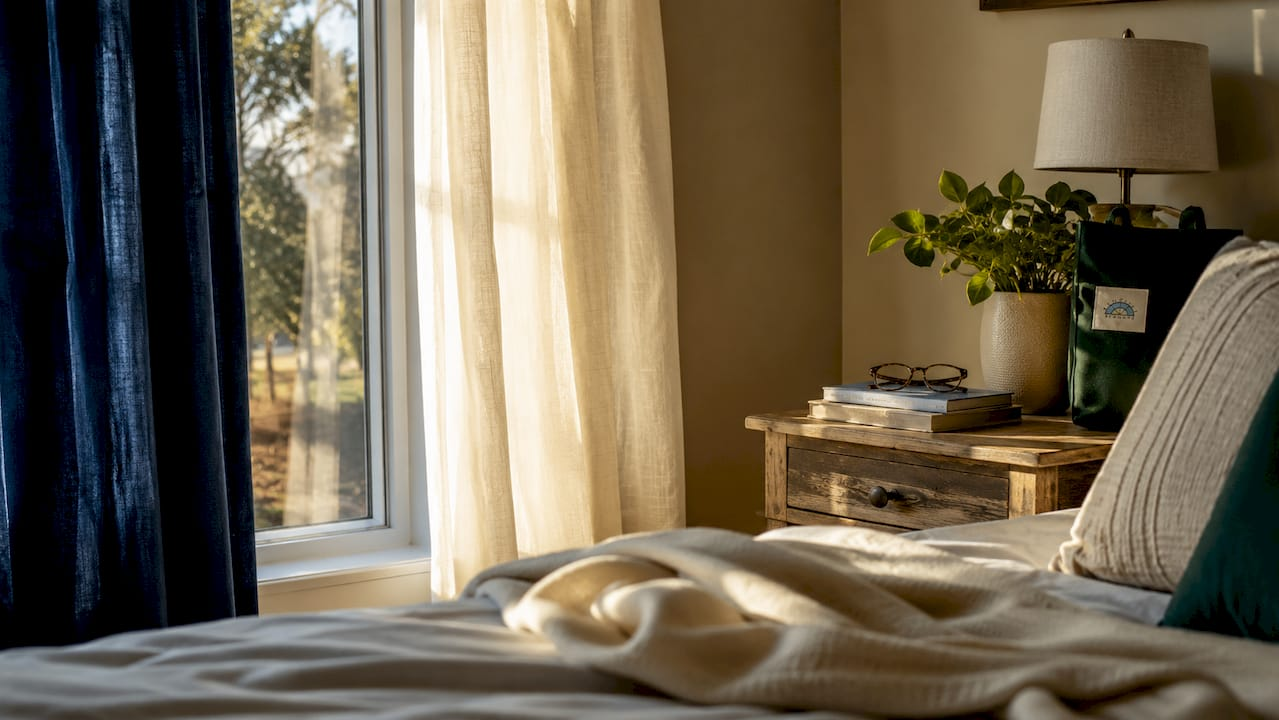
Layering both fabrics in a single room is a practical and visually sophisticated solution. A sheer linen panel closest to the glass filters light during the day, while a velvet outer panel provides privacy and insulation at night. This approach is well documented in professional layering techniques for window treatments.
Pairing curtain fabric with upholstery also matters more than most homeowners realize. Balancing curtain fabric weight with upholstery improves room sophistication by layering different scales and materials. Matching velvet curtains with velvet sofas, for example, creates a flat, one-dimensional effect. Pairing velvet curtains with linen or cotton upholstery creates contrast and visual interest. Industry professionals recommend intentionally varying fabric weight between curtains and furniture for a refined, layered interior. For a broader overview of how these fabrics fit within the full range of options, the curtain fabric types list from Beautifulwindowselgin covers the complete spectrum. Textile professionals working across hospitality and residential settings also offer useful perspective on selecting textiles for layered spaces, with principles that translate directly to home interiors.
Key Takeaways
Velvet curtains deliver superior insulation, light control, and acoustic comfort, while linen curtains offer breathability, natural light diffusion, and a relaxed aesthetic best suited to sunlit, casual spaces.
| Point | Details |
|---|---|
| Fabric weight defines performance | Velvet (250–600 gsm) insulates and blocks light; linen filters and breathes. |
| Room orientation guides the choice | North-facing rooms suit velvet; south-facing rooms suit linen for light control. |
| Lining improves both fabrics | Adding a quality lining extends durability and boosts thermal and UV performance. |
| Velvet requires heavy-duty hardware | Standard rods fail under velvet’s weight; always use hardware rated for dense fabrics. |
| Linen creasing is a design feature | Accept natural wrinkles as part of linen’s aesthetic rather than fighting them. |
What I have learned from real velvet and linen installations
After working with both fabrics across dozens of residential projects, the pattern I see most often is homeowners underestimating the hardware problem with velvet. They spend carefully on the fabric, then mount it on a rod that bows within a week. The curtain looks wrong, the rod gets replaced, and the whole installation costs more than it should have. Spec the hardware before you order the fabric, not after.
With linen, the recurring issue is UV damage in rooms with large south-facing windows. Homeowners love the look of unlined linen in bright rooms, but within two years the fabric fades and weakens noticeably. A simple blackout or thermal lining solves this completely without changing the front-facing appearance of the curtain.
The styling insight that changes the most rooms is the upholstery contrast principle. Velvet curtains in a room with velvet furniture feel heavy and one-note. The same velvet curtains against a linen sofa or a cotton-upholstered chair create a layered, considered look that reads as intentional design rather than coincidence. Varying texture across a room is the single most underused tool in residential interior design.
My honest recommendation: choose velvet when the room needs warmth, drama, and light control. Choose linen when the room needs air, light, and a relaxed character. When a room needs both, layer them.
— Marrion
Premium fabric options from Beautifulwindowselgin
Beautifulwindowselgin carries a curated selection of designer drapery fabrics that includes both velvet and linen options in a range of colors, weights, and textures suited to residential and professional projects. Each fabric is available by the yard, with samples available to help you confirm color and hand feel before committing to a full order.

Beyond fabric sales, Beautifulwindowselgin offers professional window treatment measurement services and custom drapery crafting to ensure every panel fits and functions exactly as intended. Whether you are working with velvet for a formal dining room or linen for a sun-filled living space, the team provides fabric selection guidance based on room orientation, style, and maintenance preferences. Nationwide shipping makes the full service accessible regardless of location.
FAQ
What is the main difference between velvet and linen curtains?
Velvet is a dense, plush pile fabric that insulates and blocks light, while linen is a lightweight, breathable natural fiber that filters light and suits casual, sunlit spaces.
Can velvet curtains reduce noise in a room?
Velvet curtains reduce high-frequency sound reflections and echo, but they do not block low-frequency noise like traffic. Panels hung at 2.5 times the window width perform best acoustically.
Do linen curtains shrink after washing?
Linen curtains can shrink 1–3% when washed gently. Pre-washing the fabric before hemming and cutting to final length prevents panels from pulling above the floor after the first wash.
Which curtain fabric is better for energy efficiency?
Velvet curtains with thermal lining reduce heat loss by up to 25% in winter, making them the stronger choice for energy efficiency. Linen provides minimal thermal resistance without a lining.
How do I choose between velvet and linen for my room?
Start with room orientation. North-facing or cooler rooms benefit from velvet’s density and warmth. South-facing or bright rooms suit linen’s light-filtering and breathable properties.
Recommended
- 7 Essential Curtain Fabric Types List for Homeowners – Shop Designer Fabrics by the Yard | Curtains & Drapery
- What Is Velvet Drapery: A Complete Homeowner’s Guide – Fabric Store in Columbia, SC | Drapery Making Services
- Linen Blend Curtains: What They Are and How to Choose Them – Fabric Store in Columbia, SC | Drapery Making Services
- Curtain lining explained: Improve comfort, style, efficiency – Fabric Store in Columbia, SC | Drapery Making Services