TL;DR:
- A structured upholstery fabric workflow guides from design confirmation through fabric inspection and seam testing to achieve durable, professional results. Following this process reduces material waste, prevents costly rework, and ensures appropriate fabric selection based on furniture design and room environment. Proper yardage calculation, fabric testing, and inspection are essential for successful upholstery projects.
An upholstery fabric workflow is defined as the systematic sequence of steps that guides you from initial fabric selection through cutting, sewing, and final installation to achieve a durable, polished finish. A structured upholstery fabric process reduces material waste, prevents costly rework, and produces results that hold up over years of use. Industry standards for fabric weight measured in grams per square meter (GSM) and pattern repeat planning both shape how this workflow unfolds. Whether you are tackling a DIY dining chair or commissioning a custom sofa, following a defined sequence makes the difference between a tight, professional result and a frustrating do-over.
What prerequisites and tools do you need to start your upholstery fabric workflow?
Preparation determines the quality of everything that follows. Before you touch a single yard of fabric, you need the right tools and a clear picture of the furniture piece and its environment.
Essential tools for upholstery projects:
- Measuring tape and a fabric ruler for accurate dimensions
- Fabric shears and a rotary cutter for clean, straight cuts
- Upholstery needles, heavy-duty thread, and a sewing machine with a walking foot
- Staple gun and pneumatic stapler for installation
- Seam ripper, chalk marker, and pattern weights for layout work
- Foam, batting, and welt cord for cushion and seam construction
Understanding the furniture’s geometry before selecting fabric is not optional. A tufted chair back behaves differently from a flat bench seat, and the fabric you choose must accommodate the specific curves and stress points of that piece. Room environment matters too: a fabric suited for a low-traffic reading nook will fail quickly on a family room sectional.
Yardage calculation starts at this stage. Measure each panel of the furniture separately, account for seam allowances, and note whether the fabric has a directional print or a pattern repeat. Fabric width standards run 54 inches for most industry rolls, with 56-inch and 60-inch widths available for specialty needs. Narrower fabric means more seams or more yardage, so confirm width before ordering.

| Preparation item | Why it matters |
|---|---|
| Furniture measurements by panel | Prevents under-ordering and mismatched cuts |
| Room traffic assessment | Determines minimum GSM and durability requirements |
| Fabric width confirmation | Directly affects total yardage needed |
| Pattern repeat documentation | Adds yardage for alignment; affects layout planning |
| Tool inventory check | Avoids mid-project delays from missing equipment |

Pro Tip: Photograph every panel of the furniture before stripping the old fabric. Those photos serve as a cutting template and save significant time during layout.
How do you choose the right upholstery fabric in a streamlined workflow?
Fabric selection for upholstery starts with the furniture design, not the fabric swatch. Choosing fabric before defining furniture design and room environment is the most common mistake in the upholstery fabric process. Experts recommend locking in the furniture style and silhouette first, then establishing a color and material direction, and only then evaluating specific fabrics against those criteria.
Fabric weight is the most objective filter to apply early. The GSM scale gives you a reliable starting point:
- 200–350 GSM: Light upholstery, accent chairs, decorative pillows, and low-traffic pieces
- 350–500 GSM: Standard upholstery for sofas, dining chairs, and bedroom benches
- 500+ GSM: Heavy-duty applications including commercial seating and high-traffic family furniture
You can read more about how fabric weight affects performance and longevity across different furniture types before committing to a purchase.
Color, texture, and pattern scale all interact with the room’s existing elements. A large-scale botanical print that looks balanced in a showroom can feel overwhelming on a compact loveseat in a small apartment. Test pattern scale by holding the fabric bolt at the distance a viewer would normally see the finished piece.
The Martindale rub count is the standard durability rating for upholstery textiles. Residential use generally requires a minimum of 15,000 rubs, while heavy residential or light commercial use calls for 25,000 rubs or more. Backing stability matters equally: a fabric with a loose weave and no backing will distort under stapling tension and fail at seams within months.
Testing fabric samples on the actual furniture geometry is non-negotiable. Fold, pull, and pinch the sample over the curves of the piece to observe how it behaves before approving bulk yardage. Distortion at the sample stage predicts exactly the problems you will face during installation.
Pro Tip: Order at least three fabric samples in your shortlisted options and pin them directly to the furniture in the room where the piece will live. Evaluate them under both natural and artificial light before deciding.
How to accurately calculate and prepare fabric yardage for upholstery projects
Accurate yardage calculation prevents two equally costly problems: running short mid-project and over-ordering expensive material. The calculation process follows a clear sequence.
- Measure each furniture panel individually: seat, back, inside arms, outside arms, cushion tops, and cushion sides.
- Add 1–2 inches of seam allowance to every panel measurement.
- Confirm the fabric’s usable width after selvage removal, typically 52–54 inches on a standard 54-inch roll.
- Divide the total panel area by the usable fabric width to get a running-yard estimate.
- Identify the pattern repeat length. For a 24-inch repeat, add one full repeat per panel to your running-yard total.
- Add 10–15% to the final number as a buffer for cutting errors and defects.
Large pattern repeats require additional yardage for alignment and can push waste well above 20% without careful layout planning. Efficient upholstery manufacturing targets 8–12% waste through strategic fabric layout. That benchmark applies equally to DIY projects: plan your cut layout on paper before touching the fabric.
Fabric directionality adds another variable. Velvet, corduroy, and fabrics with a one-way print must all be cut in the same direction. Cutting against the nap or print direction on even one panel creates a visible mismatch in the finished piece.
Inspect fabric on arrival for defects and dye lot consistency before cutting. Supplier defects discovered after cutting or sewing has started become expensive problems. Check the dye lot number on every bolt if your order spans multiple rolls.
Pro Tip: Always order a minimum of one extra yard beyond your calculated total. The cost of that extra yard is always less than the cost of a second shipping charge or a dye lot mismatch on a reorder.
What are best practices for cutting, sewing, and installing upholstery fabric?
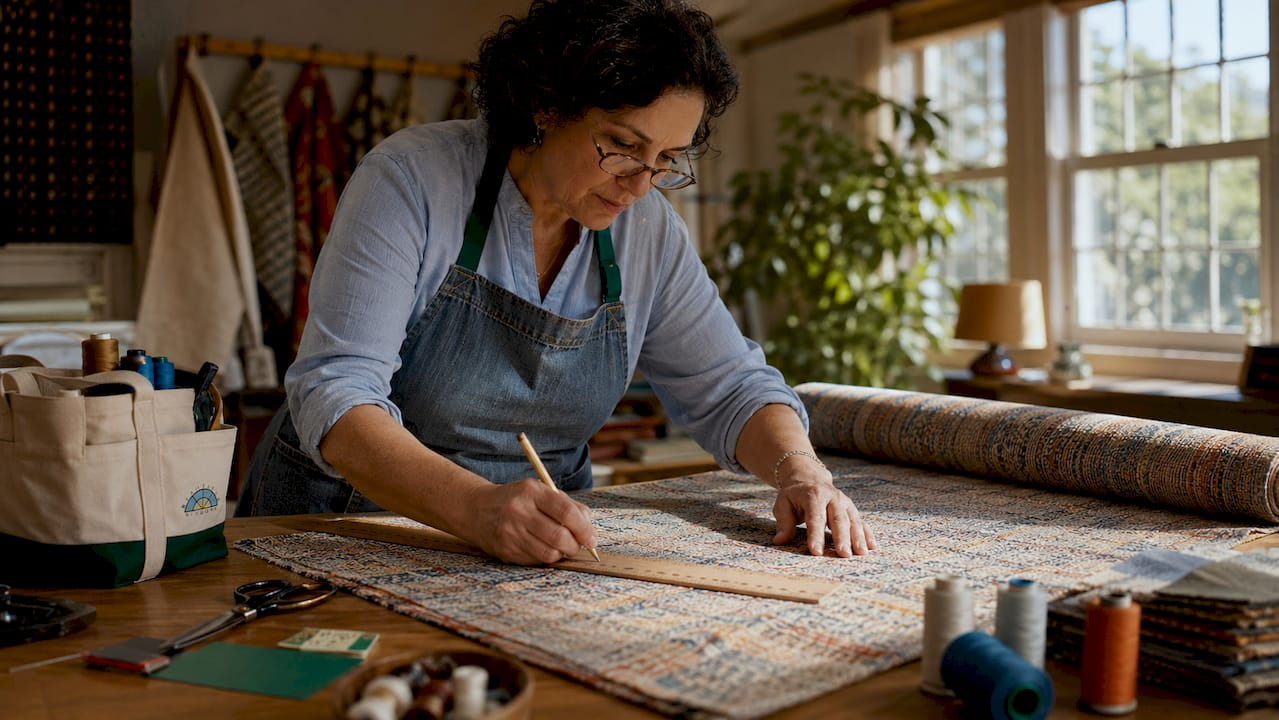
Execution quality determines whether a well-chosen fabric performs as expected or fails prematurely. The cutting stage is where most DIY projects lose precision. Cut on a flat, stable surface large enough to lay the full panel without folding. Use chalk lines or a long ruler to keep cuts straight, and always cut with the grain unless the design specifically requires a bias cut.
Testing full seam stacks with thread, welt cord, and backing layers before final planning is the single most important pre-installation step. Seam behavior is a frequent failure point in upholstery. A seam that holds on a flat test piece may pucker or pull apart when stretched over a curved arm or a tight corner.
Key execution practices:
- Match thread weight to fabric weight. Heavy upholstery fabric requires a size 16 or 18 needle and heavy-duty polyester thread.
- Sew sample seams on scrap pieces of the actual fabric before cutting final panels.
- Use a backing material or woven interfacing on loosely woven fabrics to prevent distortion under stapling tension.
- Pull fabric evenly from opposite sides when stapling to maintain consistent tension across the panel.
- Work from the center of each panel outward to the corners, not from one edge to the other.
The cushion build and armature beneath the fabric affect how the finished piece looks and feels. A cushion with insufficient density will cause the fabric to wrinkle and sag within months. Use high-resilience foam rated for the intended use level, and wrap it with a layer of Dacron batting to soften edges and fill out the fabric cover.
Pro Tip: Sew a test seam using the actual thread, welt cord, and backing you plan to use on the finished piece. Pull the seam firmly by hand. If it puckers or the fabric distorts, adjust your stitch length or backing choice before cutting your final panels.
How to troubleshoot common upholstery fabric workflow mistakes?
Most upholstery failures trace back to decisions made before the first cut. Fabric chosen in isolation almost always needs reconsideration once it meets the actual furniture geometry and room context. The fix is to integrate design and environment decisions before fabric selection, not after.
Common mistakes and their solutions:
- Wrong fabric weight for the application: A 250 GSM fabric on a high-traffic sofa will pill and wear through quickly. Match GSM to the furniture’s use level before ordering.
- Ignoring fabric backing and stretch: Unbacked fabrics stretch unevenly under stapling tension, causing visible distortion. Always test backing stability before bulk approval.
- Underestimating yardage for pattern repeats: Add one full pattern repeat per panel to your calculation. Skipping this step leads to mismatched seams or a shortage mid-project.
- Skipping the COM technical review: A formal Customer’s Own Material (COM) process, including technical review of backing and seam behavior, reduces procurement risk and rework on professional projects.
- Cutting before inspecting the delivery: Defects found after cutting cannot be returned. Inspect every yard before the first cut.
Early material inspection and a structured technical review catch the majority of problems before they become expensive. Swatch cards alone are insufficient for fabric approval. Testing fabric on the furniture’s shape and cushion build is the only reliable way to confirm fit and behavior before committing to the full installation.
Pro Tip: Build a one-page checklist for every upholstery project: design confirmed, fabric weight verified, yardage calculated with repeat allowance, fabric inspected on arrival, seam stack tested. Completing each step before moving to the next eliminates the majority of common workflow errors.
For inspiration on how fabric pattern and color choices interact with room design, the Afrocentric living room decor ideas at Melanin Art offer a strong example of how textile choices anchor a cohesive interior.
Key Takeaways
A structured upholstery fabric workflow, from design confirmation through fabric inspection and seam testing, is the most reliable path to a durable, professional finish.
| Point | Details |
|---|---|
| Design before fabric | Confirm furniture style and room context before selecting any fabric. |
| Match GSM to use level | Use 350–500 GSM for standard pieces and 500+ GSM for high-traffic applications. |
| Calculate yardage with repeats | Add one full pattern repeat per panel and a 10–15% buffer to every order. |
| Inspect fabric on arrival | Check for defects and dye lot consistency before cutting to avoid costly rework. |
| Test seams before cutting finals | Sew full seam stacks with actual thread and backing to confirm behavior under tension. |
What I have learned from years of working with upholstery fabric
The advice that changed how I approach every upholstery project is simple: the fabric is the last decision, not the first. Most people walk into a fabric store with a color in mind and walk out with something that fights the furniture for the next decade. The projects I have seen succeed consistently are the ones where the upholsterer or homeowner locked in the furniture’s design intent, the room’s light conditions, and the expected traffic level before touching a single swatch.
The other lesson that took time to internalize is that testing is not optional. Swatch cards are a starting point, not an approval. Folding a sample over the actual arm of a chair and pulling it tight tells you more in ten seconds than an hour of reading fabric specifications. The step-by-step fabric selection process that Beautifulwindowselgin outlines reflects this same logic: work through the decisions in order, and the final installation almost takes care of itself.
For DIY upholsterers especially, the temptation to skip the seam stack test is real. The test takes twenty minutes. A failed seam on a finished piece takes hours to repair and often requires reordering fabric. The math is not complicated.
— Marrion
Quality upholstery fabrics available at Beautifulwindowselgin
Beautifulwindowselgin carries a curated selection of upholstery textiles suited to the full range of project types, from lightweight accent chairs to heavy-duty seating. The collection spans solid and textured weaves, jacquard patterns, and embroidered fabrics, all sold by the yard with nationwide shipping.

Whether you are sourcing fabric for a single dining chair or outfitting an entire room, Beautifulwindowselgin offers fabric samples to support your selection process before you commit to a full order. The upholstery and drapery fabric collection includes multi-color textiles and coordinating options that work across both furniture and window treatments. Design consultation support is available for projects that require a more guided approach.
FAQ
What is an upholstery fabric workflow?
An upholstery fabric workflow is the structured sequence of steps covering design confirmation, fabric selection, yardage calculation, material inspection, and installation. Following this sequence reduces waste and prevents costly rework.
How do I choose the right fabric weight for upholstery?
Match fabric weight to the furniture’s use level: 200–350 GSM for light or decorative pieces, 350–500 GSM for standard residential furniture, and above 500 GSM for high-traffic or heavy-duty applications.
How much extra fabric should I order for pattern repeats?
Add one full pattern repeat per panel to your base yardage calculation, then add a 10–15% buffer for cutting errors and defects. Large repeats can push waste above 20% without careful layout planning.
Why should I test fabric before approving it for upholstery?
Swatch cards do not reveal how a fabric behaves under tension or over curves. Folding and pulling the sample over the actual furniture geometry predicts distortion and fit problems before they appear in the finished piece.
What is a COM process in upholstery?
COM stands for Customer’s Own Material. It is a formal review process covering fabric backing, seam behavior, and flammability compliance. A COM review reduces procurement risk and material-related rework on professional upholstery projects.
Recommended
- Step by Step Fabric Selection for Home Projects – Fabric Store in Columbia, SC | Drapery Making Services
- Defining upholstery materials: A practical guide for homes and designe – Fabric Store in Columbia, SC | Drapery Making Services
- Upholstery Fabric Types: A Practical Guide for 2026 – Fabric Store in Columbia, SC | Drapery Making Services
- Upholstery Fabric Checklist: A Practical Guide for Homeowners – Fabric Store in Columbia, SC | Drapery Making Services