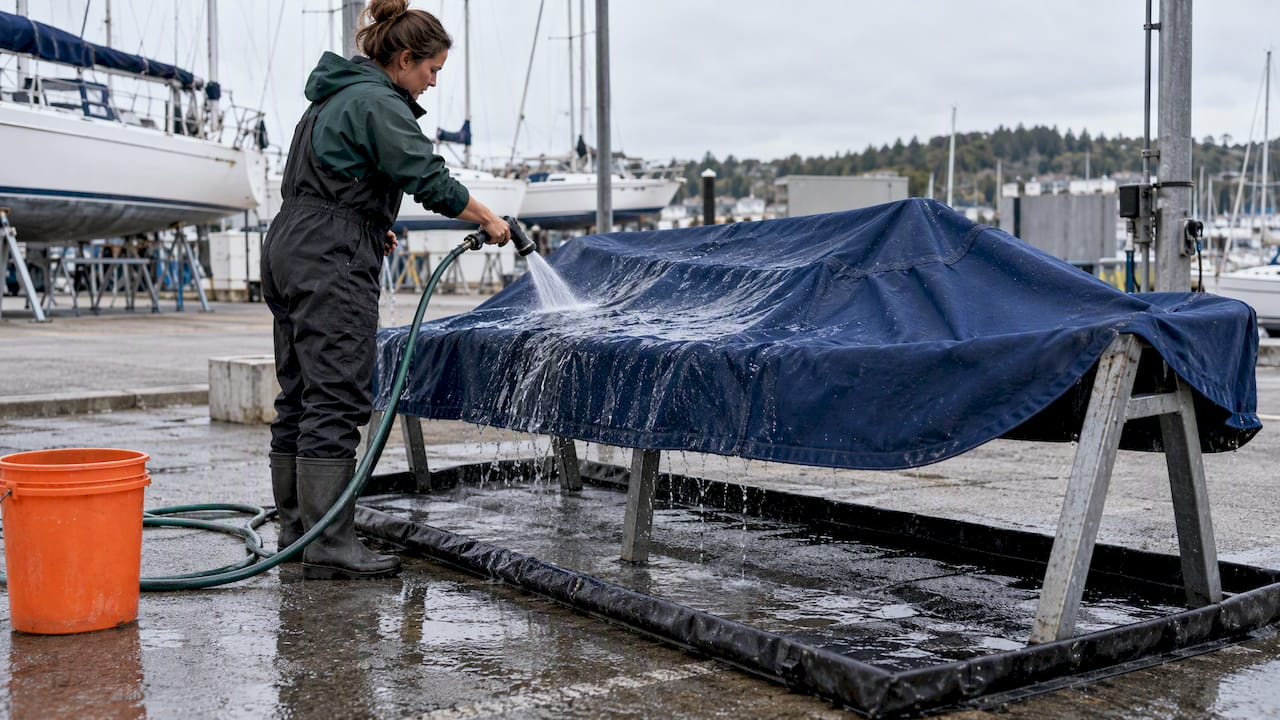
The single most important habit in marine canvas care is frequent rinsing: rinse off salt and dirt regularly, wash periodically with a mild, marine-safe soap, and skip the pressure washer entirely. Test any stronger cleaner on a hidden patch first, and do the work on land with biodegradable, phosphate-free products so runoff never reaches the water.
TL;DR:
- For stubborn stains, test a diluted bleach and soap solution on a hidden area, apply briefly, blot rather than scrub, then rinse thoroughly.
- For mild mildew, use diluted vinegar and water; if growth returns or fabric weakens or remains discolored, call a professional rather than repeat treatments.
- If water soaks in rather than beading, clean and dry the fabric before applying a suitable protectant, then follow its cure time.
- Clean clear vinyl with soft cotton cloths and fresh water; avoid paper towels and glass cleaners containing ammonia, which can cloud or crack plastic permanently.
- Before storage, dry canvas and vinyl completely, keep covers ventilated, and fold clear vinyl as little as possible because creases can become permanent cracks.
Table of Contents
- Quick Canvas Care Checklist for After Trips and Monthly Upkeep
- Step-by-Step Cleaning Methods: Routine Versus Heavy-Duty
- Mildew and Odor Removal: Safe Remedies and When to Call a Pro
- Waterproofing and Retreating: How, When, and What to Avoid
- Clear Vinyl Window and Hardware Care
- Storage, Inspection Checklist, and Seasonal Maintenance Schedule
- What Actually Matters in Marine Canvas Care
- Marine Fabric and Custom Panels When Cleaning Isn’t Enough
- FAQ
- Sources
Quick Canvas Care Checklist for After Trips and Monthly Upkeep
A few minutes of attention after each trip prevents most of the staining and mildew problems that show up later. Keep a soft brush, a bucket, and a bottle of mild soap on board, and the routine is easy to maintain.
- Rinse the canvas with fresh water after every outing to clear salt, bird droppings, and loose dirt.
- Brush off debris before it works into the weave.
- Periodically, wet the fabric, apply a marine-safe soap or a gentle dish soap, agitate lightly, then rinse thoroughly.
- Let the canvas dry completely before folding or stowing it.
- Keep covers ventilated rather than sealed tight, since trapped moisture is what invites mildew.
- Check seams, zippers, and snaps for wear, and photograph any damage so repairs are easier to describe later.
Pro Tip: Keep a small spray bottle of diluted soap in a dock box so rinsing becomes a quick habit instead of a weekend project.
Step-by-Step Cleaning Methods: Routine Versus Heavy-Duty
Most canvas only needs the light version of this process. Save the heavier steps for stains that won’t budge after a normal wash.
Routine cleaning:
- Flood the canvas with fresh water to loosen surface dirt.
- Apply a phosphate-free, biodegradable soap with a soft brush or sponge.
- Work in small sections so the soap never dries on the fabric.
- Rinse completely before moving to the next section.
Heavy cleaning for stains and mildew:
- Test the solution on a hidden seam or corner first.
- For tough spots, Sail Magazine’s maintenance guidance describes a mix of a diluted bleach-and-soap mix, applied briefly rather than left to soak.
- Blot the stain instead of scrubbing it, since aggressive rubbing can grind contaminants deeper into the weave.
- Rinse thoroughly and let the canvas air dry.
Statistic Callout: Avoid pressure washing, which can damage canvas fibers and reduce their UV resistance, according to Sail Magazine, which also notes that Sunbrella’s color is woven into the fiber itself and loses its resistance once those fibers are damaged by overly vigorous scrubbing.
Do this work on land, not at the dock, and contain the rinse water where local rules require it. The Clean Boating Tip Sheet recommends plain water and a sponge whenever that’s enough, saving soap for when it’s truly needed, and disposing of any cleaning product on shore rather than letting it wash into the harbor.

Mildew and Odor Removal: Safe Remedies and When to Call a Pro
A musty smell paired with dark speckles usually means mildew, not just dirt. True mildew sits on the surface of the fiber rather than soaking through the color the way a stain does, and it tends to spread fastest in folded, damp canvas that never got the chance to dry.
- For mild cases, a mild vinegar-and-water solution applied with a soft cloth often lifts early mildew without harming the finish.
- For stubborn growth, the diluted bleach and soap mix described above can help, but limit soak time and rinse completely so no residue stays in the weave.
- Wear gloves and work outdoors or in a well-ventilated space, since scrubbing mildew indoors can send spores into the air.
- According to the Museum Conservation Institute, natural fiber textiles are hygroscopic and prone to mold in humid conditions, so improving airflow and drying thoroughly before storage matters as much as the cleaning itself.
- If mildew keeps coming back after repeated cleaning, or if the fabric has weakened or discolored permanently, it’s time to call a professional canvas cleaner or a fabricator rather than keep treating the same spot.
Waterproofing and Retreating: How, When, and What to Avoid
Water that beads up and rolls off means the factory repellency is still doing its job. Water that soaks in instead means it’s time to retreat the fabric, and a small water test poured over a seam will show you which situation you’re in.
- Most acrylic marine fabrics benefit from reapplying a waterproofing treatment periodically, as the original factory coating wears down.
- Clean and fully dry the canvas before applying any protectant, since trapped dirt or moisture will get sealed under the new coating.
- Test the product on a hidden area first and follow the manufacturer’s stated cure time before folding or covering the canvas.
- Avoid silicone-based products on acrylic fabrics, and favor a protectant made for the specific material.
Pro Tip: Apply waterproofing treatment on a dry, mild day and avoid soaking the seams directly, since excess product there can attract dirt instead of repelling water.
Clear Vinyl Window and Hardware Care
Clear vinyl windows need gentler handling than the canvas around them, since the wrong cleaner can cloud or crack the plastic permanently.
- Clean vinyl with soft cotton cloths and plenty of fresh water, never paper towels or ammonia-based glass cleaners, which BoatUS warns can cause clouding and cracking.
- Rinse thoroughly and pat dry rather than wiping, which can scratch the surface.
- Use a manufacturer-recommended polish for coated vinyl, such as the IMAR or Strataglass product lines, and reapply protective coatings periodically on windows that see heavy sun and salt exposure.
- Lubricate zippers and snaps with a silicone-free, non-petroleum product, and flush salt from the tracks regularly so they don’t seize.
- Keep windows covered or shielded when treating nearby canvas, and keep sunscreen and insect repellent away from vinyl entirely, since both can cause permanent haze.
Storage, Inspection Checklist, and Seasonal Maintenance Schedule
Canvas and vinyl both need to be bone dry before they go into storage. Fold vinyl as little as possible, since creases can turn into permanent cracks, and lay panels flat with a towel between fabric layers whenever space allows.
- Run a quick scratch test on seams to check thread condition, and look over the fabric for fading or thinning spots.
- Press the canvas to confirm it’s still “drum tight” across the frame, which is a sign the material hasn’t stretched or sagged.
- Photograph any tears, discoloration, or hardware issues before they’re forgotten over the winter.
- Plan on a monthly visual check, frequent rinsing all season, and a full deep clean and inspection periodically, depending on how much sun and salt the boat sees.
- If a panel needs professional attention, label it clearly, bring photos of the damage, and note when the issue started so a canvas shop can diagnose it faster.
What Actually Matters in Marine Canvas Care
Most canvas problems trace back to two things: skipped rinsing and trapped moisture. Frequent fresh water rinses, gentle soap, good airflow, and shore-based cleaning solve the majority of what boat owners deal with, and they cost far less time than people expect once the habit sticks.
Where I’d draw the line is repeated aggressive cleaning on canvas that’s already lost its finish. At some point, another round of bleach and scrubbing does less for the fabric than a clean replacement would, especially once the weave has thinned or the color has faded unevenly. Use the checklists above as your baseline, and bring in a professional for stubborn mildew or torn seams rather than repeating a treatment that already failed once.
— Marrion
Marine Fabric and Custom Panels When Cleaning Isn’t Enough
When canvas has worn past what cleaning and retreating can fix, replacing the panel is often the simpler path. We carry fabrics sold by the yard, alongside custom drapery and panel-making services that include fabric samples and nationwide shipping, so a worn bimini top or sprayhood cover doesn’t have to mean a trip to a generic big-box supplier.

If you’re weighing a repair against a full replacement, our team can walk through fabric options for a custom panel built to the dimensions you actually need. Browse our marine textile and upholstery fabrics or request a consultation to get a sample in hand before you commit to a yard.
FAQ
How do you waterproof marine canvas?
Clean and fully dry the fabric first, then apply a manufacturer-recommended waterproofing product made for marine acrylic, avoiding silicone-based formulas. Most fabrics need retreating periodically, as the original factory coating wears down, so test a hidden area and follow the stated cure time before folding the canvas.
Can you use Dawn dish soap on Sunbrella fabric?
A mild dish soap in diluted form is generally fine for routine cleaning, but it should always be rinsed out completely before the fabric dries. For tougher stains, Sail Magazine describes a stronger mix of diluted bleach and soap, applied briefly rather than soaked in.
What is the best cleaner for boat canvas?
A phosphate-free, biodegradable marine soap handles most routine cleaning without harming the fabric’s factory coatings. Independent testing from outlets like Yachting Monthly compares several cleaners and protectants, which is a useful way to see how different products perform before buying one.
How do you clean mold off marine canvas?
For light mildew, a mild vinegar-and-water solution applied with a soft cloth often works, while stubborn growth may need a brief diluted bleach soak followed by a thorough rinse. The Museum Conservation Institute notes that natural fiber textiles are prone to mold in humid conditions, so drying the fabric completely and improving airflow matters just as much as the cleaning step itself.
When should I replace canvas instead of cleaning it again?
If mildew keeps returning after repeated treatment, or the fabric has thinned, faded unevenly, or lost its water repellency for good, cleaning won’t bring back the original performance. At that point, a professional canvas cleaner or a replacement panel is usually the more practical option. For delicate household textiles facing a similar decision, a professional cleaning service can offer a useful comparison for how pros evaluate when a fabric is worth saving.
Sources
- Mold and Mildew on Textiles | Museum Conservation Institute
- Clean Boating Tip Sheet: Vessel Cleaning and Maintenance
- How to Maintaining the Canvas on a Sailboat
- Boat Window Care | BoatUS
Leave a Reply