TL;DR:
- Decorative textile selection involves five steps: assessing room function and mood, choosing a dominant fabric, applying the 60-30-10 layering rule, matching fiber type to use, and testing physical samples. Skipping these steps often results in mismatched or short-wearing rooms, making sample testing and proportioning essential. Following this structured process ensures balanced, durable, and visually appealing decor that fits every space and budget.
Decorative textiles selection is a structured five-step process covering room function, mood, layered proportions, fiber suitability, and physical sample testing. Skipping any step produces results that look mismatched or wear out quickly. The 60-30-10 layering rule and fabric weight classifications are the two industry standards that anchor every professional fabric selection guide. Whether you are a homeowner choosing curtains or a decorator sourcing upholstery yardage, these decorative textiles selection steps give you a repeatable framework that works across every room and budget.
What are the decorative textiles selection steps?
The five steps are: assess room function and mood, choose a dominant anchor fabric, apply the 60-30-10 layering ratio, match fiber type to use, and order physical samples before committing. Each step builds on the last. Rushing to color before settling function and mood is the single most common error decorators make, and it consistently produces rooms that feel off without a clear reason why.
Mood dictates texture and fabric weight before color selection. A calm, restful bedroom calls for soft, matte surfaces like brushed cotton or linen. An energizing home office benefits from tighter weaves and crisper textures that feel structured and alert. Getting this sequence right makes every downstream decision easier and more consistent.
How does room function and mood guide fabric choices?
Room function sets the durability floor for every fabric you consider. A family living room with kids and pets needs fabrics rated for heavy use. A formal guest room can accommodate more delicate weaves because foot traffic is low and wear is minimal.
Mood shapes the texture and weight before you ever open a color swatch. Consider these function-mood combinations and what they mean for fabric:
- High-traffic living room, relaxed mood: Medium to heavyweight fabrics in tightly woven cotton or performance blends. Smooth or subtly textured surfaces that clean easily.
- Formal dining room, sophisticated mood: Jacquard satin or embroidered fabrics with a refined woven pattern. Medium weight with enough body to drape well on chairs and windows.
- Children’s bedroom, playful mood: Performance fabrics that mimic natural linen or velvet but resist stains and abrasion. Lightweight to medium weight for curtains; heavier for upholstered seating.
- Home office, focused mood: Crisp linen or cotton blends in medium weight. Minimal pattern to reduce visual distraction.
- Primary bedroom, restful mood: Soft cotton or cotton-linen blends for bedding; blackout-lined drapery for light control.
Pro Tip: Write down three words that describe how you want the room to feel before you look at any fabric. Those words act as a filter that eliminates most wrong choices before you spend a dollar on samples.
Lifestyle factors matter as much as room type. A household with large dogs needs a different upholstery fabric than the same room layout in a home without pets. Factor in cleaning habits, sun exposure, and how often the room is actually used.

What is the 60-30-10 rule and how do you apply it?
The 60-30-10 rule is the core textile layering principle used by professional decorators to create visual balance without monotony. It divides every room’s fabric presence into three proportional layers: dominant, secondary, and accent.
| Layer | Proportion | Role | Example fabrics |
|---|---|---|---|
| Anchor (dominant) | 60% | Sets the room’s base tone and texture | Sofa upholstery, main curtains, area rug |
| Secondary (complementary) | 30% | Adds depth and supports the anchor | Accent chairs, throw pillows, side drapes |
| Statement (accent) | 10% | Creates visual interest and personality | Decorative cushions, table runners, trim detail |
The anchor fabric carries the most visual weight, so it should be the most neutral or the most durable choice in the room. Curtains and a large sofa together often account for the full 60% in a living room. Choosing a heavyweight upholstery fabric or a structured jacquard for this layer gives the room a stable foundation.
The secondary 30% is where texture contrast does its most important work. Mixing smooth and nubby surfaces or pairing matte weaves with a subtle sheen creates the layered, expensive feel that flat, single-texture rooms lack. An accent chair in a velvet or chenille fabric next to a linen sofa is a classic example of this contrast working well.

The accent 10% is your creative freedom zone. This is where a bold embroidered cushion, a patterned table runner, or a decorative trim detail earns its place. Because the proportion is small, you can take more risk here without disrupting the room’s overall balance.
Pro Tip: If you are unsure whether a texture combination works, hold fabric swatches next to each other in the room’s natural light. The eye immediately tells you whether the contrast feels intentional or accidental.
How do you select fabric types and weights for your lifestyle?
Fabric weight is the most practical factor in any decorative fabric selection guide. The three categories are lightweight, medium weight, and heavyweight, and each serves a distinct set of uses.
| Weight category | Fabric examples | Best uses |
|---|---|---|
| Lightweight | Voile, chiffon, sheer linen | Sheer curtains, canopies, decorative overlays |
| Medium weight | Cotton, linen, velvet, brocade | Curtains, slipcovers, decorative pillows |
| Heavyweight | Upholstery velvet, jacquard, blackout fabric | Furniture upholstery, blackout curtains, structured drapes |
When uncertain, choose one weight class heavier than your first instinct. Lighter fabrics often lack structure and look limp when hung or upholstered, while a slightly heavier fabric drapes better and holds its shape longer.
Fiber choice follows weight. Cotton and cotton-linen blends work well across most rooms because they breathe, wash easily, and accept dye evenly. Velvet adds warmth and acoustic softness to bedrooms and formal sitting rooms. Synthetics and performance blends are the right call for high-traffic areas because they resist abrasion and staining without sacrificing the look of natural fibers.
For upholstery specifically, the double rub rating is the industry’s durability standard. Fabrics rated at 15,000 double rubs suit light-use chairs and guest room seating. Family sofas and dining chairs need 20,000 or more double rubs to hold up under daily use. Always check this rating before purchasing upholstery fabric by the yard. You can find detailed guidance on fabric weight applications to match each room’s demands.
Performance fabric technology has changed what is possible in family and high-traffic spaces. Fabrics engineered to look like natural linen or velvet now offer stain resistance and durability that natural fibers alone cannot match. This means you no longer have to choose between a beautiful fabric and a practical one in most home settings.
Why are physical fabric samples essential before you commit?
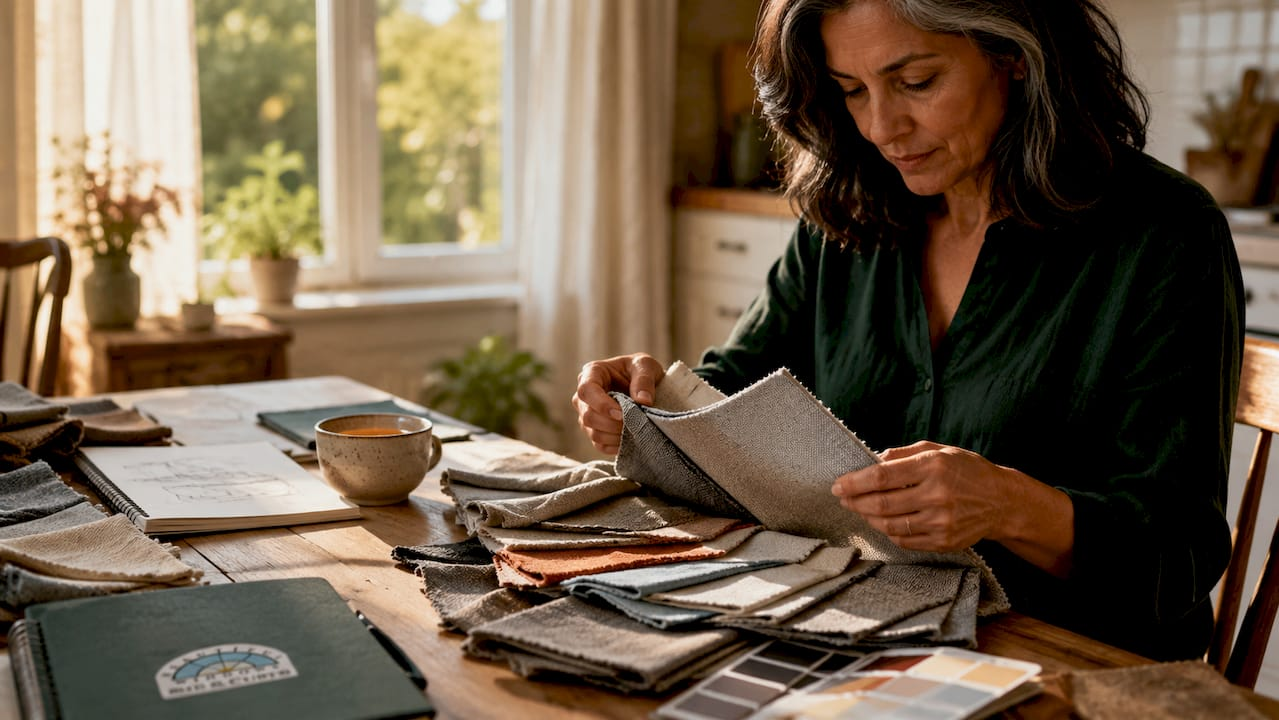
Ordering physical samples prevents the majority of costly textile mistakes. Color on a screen or in a catalog photograph rarely matches what you see in your room under your specific lighting conditions. A sample you can hold, drape, and place against your existing furnishings tells you things no image can.
Evaluate every sample through these checks:
- Color accuracy: View the sample in morning light, afternoon light, and under your room’s artificial lighting. Colors shift significantly across light sources, and a fabric that looks warm and golden in a showroom can read as yellow-green under cool LED lighting.
- Drape and weight: Hold the sample up and let it fall. A fabric that drapes softly works for curtains. A fabric that holds its shape is better suited for structured upholstery or Roman shades.
- Texture feel: Run your hand across the surface and press it lightly. Texture that photographs as subtle can feel rough or scratchy in person, which matters for upholstered seating and bedding.
- Scale of pattern: Place the sample against your wall or furniture. A pattern that looks balanced on a small swatch can overwhelm a room when repeated across a full sofa or set of curtains.
- Compatibility with existing fabrics: Lay the sample next to your current rugs, cushions, and wall color. Visual harmony is easier to judge with physical swatches than with digital comparisons.
Pro Tip: Order samples at least two to three weeks before your project deadline. Delays in sample delivery are common, and rushing this step is the fastest way to make an expensive mistake.
The fabric sampling process for window treatments and upholstery follows the same logic as wallpaper ordering: commit to large quantities only after you have tested the material in your actual space.
What are the most common mistakes in textile selection?
Most errors in decorative fabric selection come from skipping the early steps and jumping straight to color or pattern. These are the pitfalls that appear most often in home projects:
- Choosing color before mood and texture. Color is the last variable to lock in, not the first. A fabric’s texture and weight determine whether a room feels calm, formal, or energetic. Color refines that feeling; it does not create it.
- Using too many dominant fabrics. When every surface competes for attention, the room feels chaotic. The 60-30-10 structure exists precisely to prevent this. If your room has three bold anchor-weight fabrics, one of them needs to step back.
- Selecting fabric too light for the intended use. A lightweight cotton used for a sofa slipcover will pill, stretch, and lose shape within months. Match weight to function, not to what looks appealing on a bolt.
- Ignoring maintenance requirements. Dry-clean-only fabrics in a household with young children create ongoing cost and inconvenience. Always check care instructions before purchasing, not after.
- Skipping samples entirely. No amount of online research replaces a physical swatch tested in your room. This step is where tips for selecting textiles move from theory to confirmed decision.
If a project feels wrong after installation, trace back through the five steps. Most problems originate in step one (function and mood) or step three (layering proportions). Correcting the anchor fabric or adjusting the secondary layer resolves the majority of visual imbalance issues.
Key takeaways
Successful decorative textile selection follows a fixed sequence: function and mood first, layering proportions second, fiber and weight third, and physical samples last before any purchase commitment.
| Point | Details |
|---|---|
| Function sets durability requirements | Assess room traffic and use before choosing any fabric weight or fiber type. |
| Mood precedes color | Determine the room’s desired feel through texture and weight before selecting color. |
| Apply the 60-30-10 rule | Assign 60% to anchor fabrics, 30% to complementary textures, and 10% to accent details. |
| Match weight to use | Choose one weight class heavier than your instinct suggests for better drape and longevity. |
| Test physical samples | Order swatches and evaluate them in your room’s actual lighting before committing to yardage. |
Why structured selection changes the outcome
I have worked with enough home projects to say with confidence that the rooms that disappoint their owners almost always skipped the first two steps. The fabric is beautiful in isolation. The color is exactly right. But the room feels flat, or busy, or somehow wrong, and the decorator cannot explain why.
The answer is almost always texture and proportion. A room built on one dominant texture, regardless of how many colors are present, reads as flat. The 60-30-10 structure forces you to introduce contrast at the secondary layer, and that contrast is what makes a room feel considered rather than assembled.
The other lesson I keep returning to is the value of going heavier than you think you need. Lightweight fabrics look appealing on the bolt and feel like a practical choice for budget reasons. In practice, they rarely perform well over time. A medium-weight linen where you planned a sheer, or a heavyweight upholstery velvet where you considered a lighter weave, almost always produces a better result. The structure and drape of a heavier fabric make the room look more finished, not more formal.
Sampling is the step most decorators and homeowners skip when they are confident in their choices. That confidence is usually misplaced. I have seen fabric that looked perfect in every photograph read as the wrong color entirely once placed in the room. The sample step is not a formality. It is the point where the selection process becomes a confirmed decision rather than an educated guess.
— Marrion
Beautifulwindowselgin’s curated fabric collection for your next project
Beautifulwindowselgin carries a carefully selected range of designer drapery and upholstery fabrics suited to every step of the selection process described here. From lightweight sheers to heavyweight jacquard satin and embroidered upholstery textiles, the collection covers all three weight categories with fabrics sold by the yard.

The designer drapery fabric collection includes options across a full spectrum of textures, colors, and weights, with nationwide shipping available. For upholstery projects, the upholstery fabric selection includes durable textiles rated for high-traffic use. Fabric samples are available to request directly through the site, so you can test drape, color accuracy, and texture in your own space before placing a full order.
FAQ
What are the five decorative textiles selection steps?
The five steps are: assess room function and mood, choose a dominant anchor fabric, apply the 60-30-10 layering ratio, match fiber type to use, and order physical samples before purchasing. Following this sequence in order prevents the most common and costly selection errors.
What does the 60-30-10 rule mean for fabric selection?
The 60-30-10 rule assigns 60% of a room’s fabric presence to a dominant anchor fabric, 30% to complementary secondary textures, and 10% to accent details. This proportion creates visual balance and prevents any single fabric from overwhelming the space.
What double rub rating do I need for sofa upholstery?
Family sofas require a minimum of 20,000 double rubs for adequate durability. Light-use chairs and guest room seating can work with fabrics rated at 15,000 double rubs or above.
How do I choose between lightweight and heavyweight fabric?
Match fabric weight to the application: lightweight for sheers and overlays, medium weight for curtains and slipcovers, and heavyweight for upholstery and blackout drapery. When uncertain, choose one weight class heavier than your initial instinct for better structure and longevity.
Why should I order fabric samples before buying yardage?
Physical samples let you check color accuracy under your room’s actual lighting, assess drape and texture in person, and confirm compatibility with existing furnishings. Testing swatches in your space before committing to full yardage prevents the majority of expensive textile mistakes.
Recommended
- Examples of Decorative Textiles for Home Interiors – Fabric Store in Columbia, SC | Drapery Making Services
- Decorative Textiles: Transform Your Space with Style – Fabric Store in Columbia, SC | Drapery Making Services
- Types of Decorative Textiles: A 2026 Selection Guide – Fabric Store in Columbia, SC | Drapery Making Services
- Abstract Artistic Textiles for Home Décor & DIY Projects – Fabric Store in Columbia, SC | Drapery Making Services