TL;DR:
- Standard curtain panels in the United States are usually 48 to 50 inches wide and sold in pairs for full coverage.
- Proper curtain sizing involves measuring the rod length after installation and applying a fullness ratio of 1.5x to 3x, depending on desired style.
Standard curtain panels in the United States are typically 48 to 50 inches wide per individual panel. That single measurement is the foundation of nearly every window treatment calculation you will make. Curtains are most often sold in pairs, so your total fabric coverage comes from combining two panels, then adjusting for fullness. The goal is not to match your window glass exactly. It is to cover the rod, create graceful folds, and frame the window with the right visual weight.
- Standard ready-made panels: 48–50 inches wide per panel
- Curtains are sold in pairs; total coverage = combined panel widths
- The 2x fullness standard means your total fabric should be twice the rod width
- Window type and style preference determine whether you need more or fewer panels
How to measure your window width for the right curtain size
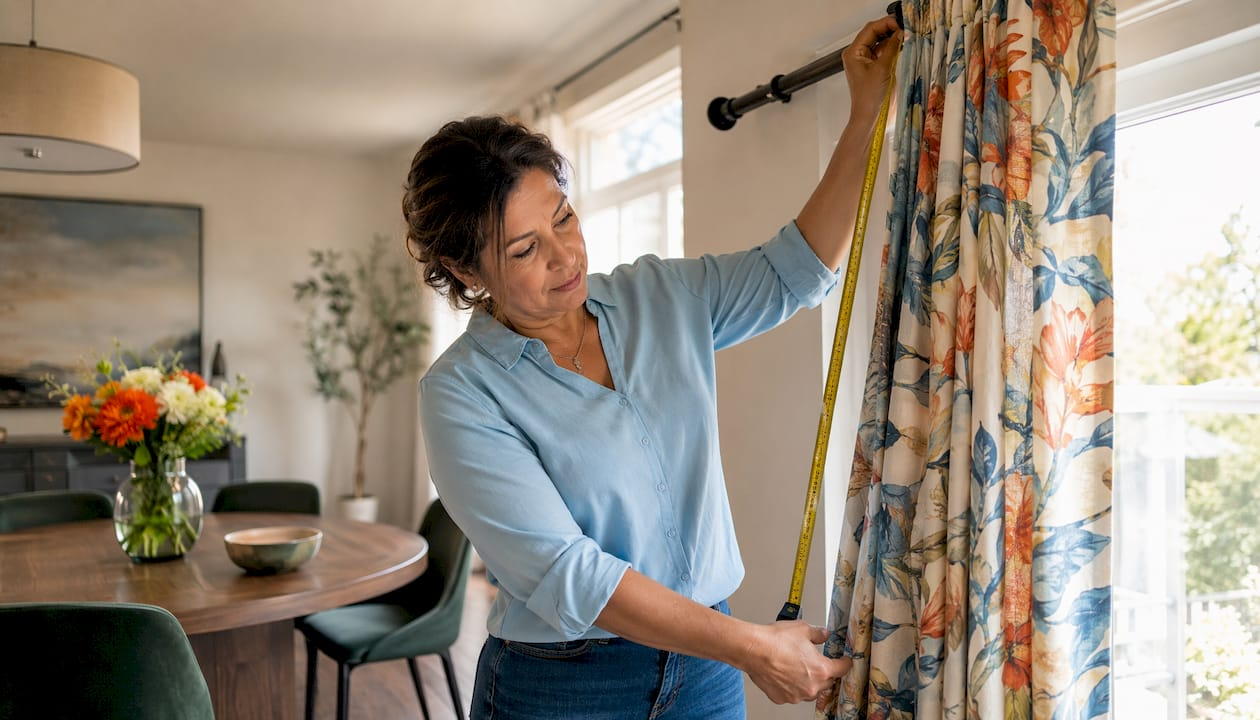
Accurate measurement starts at the rod, not the glass. Use a steel tape measure and follow these steps.
- Measure the window molding width. Run the tape from one edge of the molding to the other. Write this number down. This is your base window width, not your final rod length.
- Add rod extensions on each side. Extend the rod 6 to 12 inches beyond the molding on each side. For a 72-inch window, that puts your rod at 84–96 inches total.
- Confirm your rod length. Measure the installed rod from bracket to bracket, or finial to finial. This is the number you will use for all fullness calculations.
- Calculate total fabric width needed. Multiply rod length by your chosen fullness multiplier. At 2x fullness, an 84-inch rod requires 168 inches of total fabric width.
- Divide by panel count. If you are hanging two panels, divide total fabric width by two to find the width each panel needs to be.
- Account for stacking space. When curtains are open, they stack on either side of the window. Panels that are too narrow will block part of the glass even when pushed aside.
Pro Tip: Measure rod length after the rod is installed, not before. Bracket placement shifts the usable length, and even a 2-inch error can throw off your panel count.
Common curtain panel widths and lengths for every window type
Standard curtain panels come in widths of 46–50 inches and four primary lengths: 63, 84, 96, and 108 inches. Each combination suits a different window type and room purpose.
| Panel Width | Panel Length | Best Window Type | Typical Use |
|---|---|---|---|
| 46–50 inches | 63 inches | Small to medium windows | Kitchens, bathrooms, casual spaces |
| 46–50 inches | 84 inches | Standard bedroom windows | Bedrooms, offices, sill-to-floor coverage |
| 46–50 inches | 96 inches | Large windows, living rooms | Living rooms, dining rooms |
| 46–50 inches | 108 inches | Tall windows, high ceilings | Grand rooms, statement drapery |
| 84–108 inches | 96–108 inches | Sliding doors, picture windows | Patios, wide living areas |
- 63-inch panels work well for windows where the sill sits close to the floor or where a casual, relaxed look fits the room
- 84-inch panels are the most versatile length and suit the majority of standard residential windows
- 96-inch and 108-inch panels create a floor-to-ceiling effect that reads as formal and polished
- Wider panels in the 84-to-108-inch range are the right choice for sliding glass doors and picture windows, where a single standard panel would leave gaps
Pro Tip: For a more complete sizing breakdown by window type, the curtain panel sizing guide from Beautifulwindowselgin covers professional recommendations and common DIY errors side by side.
How curtain fullness determines the total fabric width you need
Fullness is the ratio of total fabric width to rod width. It is the single biggest factor in how your curtains look and function.
“Standard fullness ranges from 1.5 times to 3 times your window width. More fullness equals more drama and better light blocking.” — The Painted Hinge
The three standard fullness ratios break down as follows. A 1.5x multiplier produces a tailored, minimalist look with minimal gather. The 2x ratio is the industry standard, creating attractive folds without bulk. At 2.5x to 3x, curtains develop deep, luxurious pleats that improve both light blocking and thermal insulation. Heavier fabrics like jacquard satin or embroidered textiles carry higher fullness ratios particularly well because the weight helps the folds hang cleanly. Lightweight sheers, by contrast, often need 3x fullness just to look substantial. Choosing the right ratio before you buy prevents the most common sizing regret: curtains that look flat and sparse once hung.
For a deeper look at how fullness ratios shape the finished look of your window treatments, Beautifulwindowselgin’s guide on drapery fullness explains the practical and stylistic tradeoffs clearly.

Common mistakes to avoid when determining curtain width
Most curtain sizing errors come down to one root cause: measuring the glass instead of the rod.
- Measuring only the window glass. The glass width ignores rod extensions and stacking space. Calculating width by glass size alone consistently produces curtains that look too narrow and fail to cover the window fully when closed.
- Skipping rod extensions. Extending the rod 6 to 12 inches on each side is not decorative. It creates the stacking space that keeps curtains from blocking light when open.
- Ignoring fullness. Panels hung at 1x rod width look stretched and flat. The minimum recommended fullness is 1.5x, and 2x is the standard for a finished, intentional look.
- Choosing non-standard panel widths. Panels that fall between standard sizes often require awkward combinations or leave uneven gaps. Rounding to the nearest standard width simplifies installation.
- Forgetting to account for header type. Pinch pleat headers consume more fabric than rod pocket or grommet styles. Ordering panels without factoring in the header can leave you short on fullness.
Pro Tip: Before purchasing, write out the full calculation: rod length × fullness multiplier ÷ panel count = minimum panel width. Then measure windows accurately one more time to confirm.
Custom curtains versus ready-made: which sizing approach fits your window?
Ready-made curtains come in standard widths of 46–50 inches and fixed lengths, which suits the majority of standard residential windows without any modification. They are a practical choice when your window falls within common size ranges and your fullness needs align with two standard panels.
- Ready-made panels work well for windows in the 36-to-72-inch width range when paired correctly
- Standard lengths of 63, 84, 96, and 108 inches cover most floor-to-ceiling and sill-length applications
- Layering a sheer panel behind a heavier drape requires two separate sets of panels, each sized to the rod length at the appropriate fullness ratio
- Pinch pleat headers require more fabric per panel than grommet or rod pocket styles, so ready-made panels may fall short of the fullness needed for formal pleated looks
- Custom curtains allow you to specify exact width and length, which matters for bay windows, unusually tall windows, or any window where standard sizes leave gaps or excess
- The cost difference between ready-made and custom reflects not just fabric but also the precision of fit, particularly for high-fullness or specialty header styles
How header type affects the curtain width you need
The header style on a curtain panel directly changes how much fabric you need and how the panel attaches to the rod.

Pinch pleat headers gather fabric into structured pleats at the top, consuming more material per linear inch of coverage. A pinch pleat panel typically requires 2.5x to 3x fullness to form clean, deep pleats. If you are ordering ready-made panels for a pinch pleat look, you will almost certainly need more panels than a grommet or rod pocket application of the same window.
Grommet headers use metal rings sewn into the top of the panel. The rings fold the fabric into soft, uniform ripples. Grommet panels generally work well at 2x fullness and hang with a slightly more casual, modern feel. Because the rings take up some of the panel width, the effective coverage per panel is slightly less than the stated panel width.
Rod pocket headers thread the rod directly through a sewn channel at the top. They work at 1.5x to 2x fullness and suit lighter fabrics. The pocket itself consumes 2–4 inches of panel height, so account for that when calculating length as well.
When switching header styles on an existing rod, recalculate your total fabric width from scratch. The same rod can require a meaningfully different number of panels depending on which header you choose.
Curtain width recommendations by window type
Different window configurations call for different panel strategies, and the standard 48-to-50-inch panel is not always the right starting point.

Standard single windows (36–60 inches wide) are the easiest case. Two standard panels at 2x fullness cover most of these windows cleanly, with rod extensions providing the stacking space needed.
Bay windows present a more complex challenge because they have three or more angled sections. Each section of a bay window needs its own rod and its own pair of panels, sized to that section’s individual width. Trying to cover a bay window with one continuous rod and oversized panels rarely produces a clean result.
Sliding glass doors typically span 72–96 inches or wider. At 2x fullness, a 96-inch door needs 192 inches of total fabric, which usually means four standard panels. Panels that are too narrow will bunch awkwardly or fail to clear the door opening when pulled aside.
Picture windows are wide and often fixed, so the curtains are primarily decorative. Higher fullness ratios (2.5x to 3x) work well here because the panels stay in place rather than being opened and closed daily.
How to select curtain width when layering multiple panels
Layering curtains, typically a sheer panel behind a heavier drape, requires treating each layer as a separate sizing calculation.
The sheer layer should be sized to the rod at 2x to 3x fullness on its own rod or a double rod bracket. Sheers look flat and unconvincing at lower fullness ratios. The outer drape layer follows the same fullness logic, but the rod for the outer layer sits slightly in front of the sheer rod, so its length may differ by a few inches. Measure each rod independently rather than assuming they are the same length.
When both layers share a single double rod, the outer panels need enough width to clear the inner sheer when open. Panels that are too narrow will drag across the sheer as they move, causing wear and an untidy look. Adding an extra half-panel per side on the outer layer solves this without dramatically increasing fabric cost. For a full breakdown of measurement best practices across layered treatments, Beautifulwindowselgin’s resource on curtain measurements covers the details clearly.
Ready to put these measurements to work? Beautifulwindowselgin carries a curated selection of designer drapery fabrics sold by the yard, including jacquard satin, embroidered textiles, and upholstery-weight fabrics suited for every fullness ratio and header style. Whether you are working with standard panel dimensions or building a fully custom treatment, the right fabric makes the difference between curtains that hang and curtains that perform.

Key Takeaways
Standard curtain width in the U.S. is 48–50 inches per panel, and achieving a polished result requires applying the correct fullness multiplier to your rod length, not your window glass.
| Point | Details |
|---|---|
| Standard panel width | Ready-made panels are typically 48–50 inches wide per panel, sold in pairs. |
| Fullness multiplier | Multiply rod length by 1.5x (minimal), 2x (standard), or 2.5–3x (full/luxury) to find total fabric width. |
| Measure the rod, not the glass | Rod length includes 6–12 inches of extension on each side beyond the window molding. |
| Header type changes fabric needs | Pinch pleat headers require 2.5–3x fullness; grommet and rod pocket styles work at 2x. |
| Layered panels need separate calculations | Each curtain layer requires its own fullness calculation based on its individual rod length. |
Recommended
- Why Compare Curtain Panel Sizes: A 2026 Sizing Guide – Fabric Store in Columbia, SC | Drapery Making Services
- How to measure windows for curtains accurately – Fabric Store in Columbia, SC | Drapery Making Services
- Master curtain measurements for perfect window treatments – Fabric Store in Columbia, SC | Drapery Making Services
- Why choose custom curtains for your Southeastern home – Designer Fabrics by the Yard | Drapery Making Services