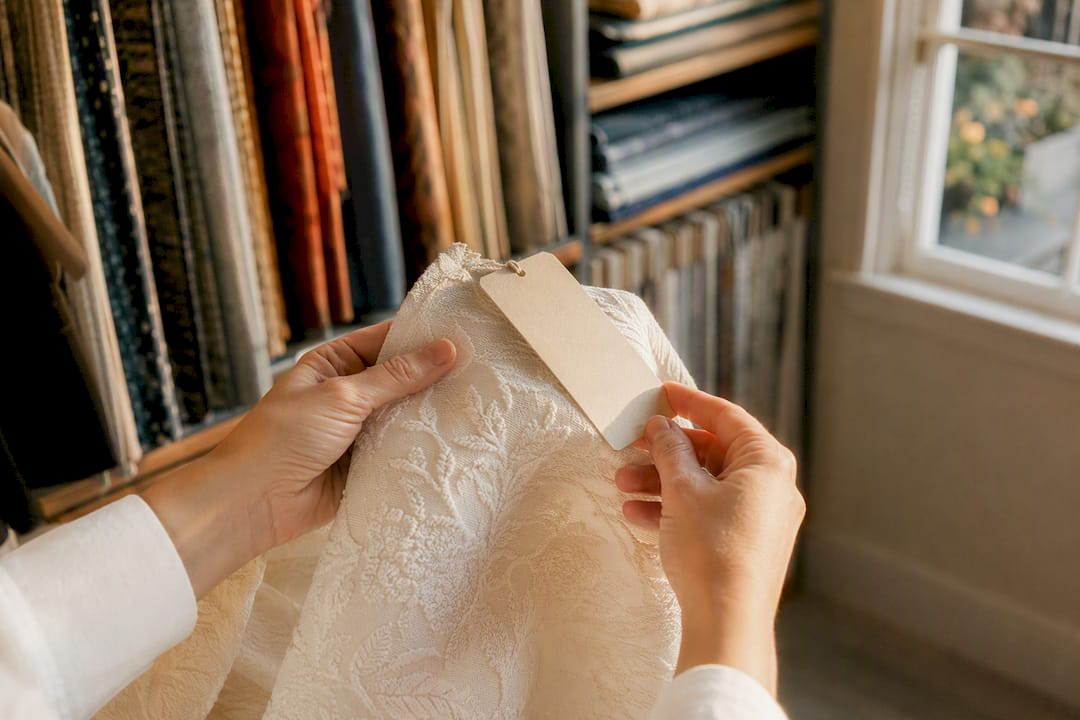
OEKO-TEX fabric meaning comes down to one thing: the textile and every component in it, from thread to zipper, has been independently tested for substances that could harm human health. Certification is tied to product classes based on skin contact, and every claim is verifiable through OEKO-TEX’s own Label Check. It does not mean the fabric is organic, biodegradable, or environmentally sustainable.
TL;DR:
- OEKO-TEX certification tests every component of a fabric, including trims and zippers, for harmful substances but does not verify organic or environmentally sustainable features.
- The certification system includes different labels such as STANDARD 100, MADE IN GREEN, ECO PASSPORT, LEATHER STANDARD, and STeP, each addressing specific supply chain or product concerns.
- Checking the label number online confirms whether a fabric has an active, appropriate certificate and prevents misinterpretation of vague claims like “non-toxic.”
- Certification guarantees safety from harmful substances but does not address fabric durability, biodegradability, or the overall environmental impact.
- For critical applications like baby bedding or upholstery, always verify the specific certificate, current status, and scope, including trims and components, before purchasing.
Table of Contents
- What Is OEKO-TEX and How Does the Certification System Work?
- Which OEKO-TEX Label Applies to Your Situation?
- What Does STANDARD 100 Test for and What Are the Product Classes?
- How Do You Verify an OEKO-TEX Label Before You Buy?
- What Does OEKO-TEX Certification Actually Guarantee, and What Doesn’t It Cover?
- A Sourcing Checklist for Designers and Homeowners
- Why I Check OEKO-TEX Certificates on Every Fabric We Source
- Get Certified Fabric Samples and Documentation From Beautifulwindowselgin
- Where to Verify OEKO-TEX Claims Yourself
- Sources
What Is OEKO-TEX and How Does the Certification System Work?
OEKO-TEX is an association of independent textile and leather testing institutes based in Europe and Asia, not a single lab or government agency. Member institutes such as Hohenstein test raw materials, dyes, and finished goods against a shared set of limit values, then issue certificates that manufacturers can license for a fee. That licensing detail matters: a company doesn’t self-certify. It submits samples to an accredited institute, passes testing, and pays to use the label for one year at a time.
The system is modular, which is part of why the label family looks confusing at first glance:
- STANDARD 100 tests finished textiles and components for harmful substances.
- MADE IN GREEN adds traceability, confirming where and under what conditions a product was made.
- ECO PASSPORT certifies the chemicals and dyes used before a fabric is even woven.
- LEATHER STANDARD applies the same harmful-substance logic to leather goods.
- STeP certifies production facilities rather than products.
Because certificates travel along the supply chain, a mill that holds an ECO PASSPORT certificate for its dyes can pass that documentation to a weaver, who uses it toward a STANDARD 100 certificate on the finished fabric. That chain is also why OEKO-TEX’s STANDARD 100 page notes that recognizing preliminary-stage certificates cuts down on duplicate testing.
Which OEKO-TEX Label Applies to Your Situation?
Not every OEKO-TEX label answers the same question, and mixing them up leads to confusion at the checkout counter or on a spec sheet.
- STANDARD 100 confirms the finished product was tested for harmful substances. It says nothing about how or where it was made.
- MADE IN GREEN confirms both product safety and traceable, socially and environmentally responsible manufacturing. Each label carries a product ID or QR code buyers can scan, according to OEKO-TEX’s own explainer on what its labels mean.
- ECO PASSPORT applies to chemical inputs, dyes, and auxiliaries used before weaving or finishing, not the finished textile itself.
- LEATHER STANDARD is the leather-specific version of STANDARD 100, relevant for upholstery with leather trim or accents.
- STeP certifies a factory’s processes, not a specific product, so it’s useful when a client asks about a supplier’s overall practices rather than one fabric bolt.
OEKO-TEX generally works alongside, not instead of, organic certifications like GOTS or facility standards like STeP, since each answers a different question about the same supply chain.
Pro Tip: If a hangtag just says “OEKO-TEX Certified” with no label name attached, ask which one it is. STANDARD 100 and MADE IN GREEN mean very different things, and vague wording is often a sign the seller doesn’t know the difference either.
What Does STANDARD 100 Test for and What Are the Product Classes?
STANDARD 100 screens for a defined list of substance groups, including banned azo dyes, formaldehyde, certain heavy metals, pesticide residues, and biocides, with limit values updated annually as the science advances, per the Hohenstein STANDARD 100 FAQ brochure. The technical STANDARD 100 document sets out four product classes, and limits get stricter as skin contact increases.
| Product Class | Typical Use | Skin Contact Level |
|---|---|---|
| Class I | Baby items (under 3 years) | Highest, strictest limits |
| Class II | Clothing worn close to skin | Direct, extended contact |
| Class III | Clothing without direct skin contact | Limited contact |
| Class IV | Decorative textiles, upholstery, curtains | Minimal to no skin contact |
Most drapery and upholstery fabrics fall into Class IV, but a testing report has to cover every component, not just the base cloth. Zippers, buttons, linings, and fillings all need to pass, and Hohenstein’s FAQ is explicit that a finished-product certificate can’t be claimed if even one trim item fails. That’s a meaningful distinction for anyone specifying upholstery with contrast piping or nursery bedding with decorative trim.
How Do You Verify an OEKO-TEX Label Before You Buy?
A hangtag alone proves nothing. Verification takes about two minutes.
- Find the label number and the name of the certifying institute, usually printed directly on the tag or swing ticket.
- Enter that number into OEKO-TEX’s Label Check tool to confirm it’s active and matches the product described.
- Note the product class listed, since a Class IV certificate on a garment claiming baby-safe status is a red flag.
- Watch for certificates that have lapsed. Licenses run one year at a time, and an expired number won’t return a valid result.
Vague marketing language like “non-toxic” or “chemical-free” without an actual OEKO-TEX label attached isn’t a certification claim at all, and Fabrikn’s guide on checking OEKO-TEX certification flags this as one of the most common ways shoppers get misled.
What Does OEKO-TEX Certification Actually Guarantee, and What Doesn’t It Cover?
Certification is a safety benchmark, not a full sustainability scorecard, and treating it as the latter leads to disappointment.
- What it reliably delivers: independent lab testing, broad coverage of harmful substance groups, and scrutiny down to individual components like zippers and linings.
- What it doesn’t cover: organic fiber content, biodegradability, carbon footprint, or how long the fabric will hold up under daily wear.
OEKO-TEX certification is worth prioritizing for baby bedding, close-contact upholstery like a reading chair or headboard, and any project where a client’s specification explicitly requires it. For a decorative curtain panel that never touches skin, it’s a nice-to-have rather than a necessity.
Pro Tip: Pair an OEKO-TEX label with fiber content and colorfastness information on the same spec sheet. Together they answer the safety, composition, and performance questions a client is actually asking, even if they only mention one of them.

A Sourcing Checklist for Designers and Homeowners
Turning label meaning into a purchase decision means asking the right questions before the fabric ships.
- Which specific OEKO-TEX label applies, and what product class is listed on the certificate?
- Is the certificate current, or close to its annual renewal date?
- Does the certificate cover the entire finished item, including trims, or only the base fabric?
- For mixed-material pieces like leather-trimmed upholstery, has the leather component been separately certified under LEATHER STANDARD?
- Can the supplier provide the actual lab report, not just a hangtag photo, on request?
| Situation | What to Ask For |
|---|---|
| Nursery or baby bedding | Class I certificate covering all trims |
| Upholstery with leather accents | STANDARD 100 plus LEATHER STANDARD |
| Client-specified project | Written certificate number and institute |
| Fire-rated or treated fabric | OEKO-TEX certificate alongside fire test data |
OEKO-TEX certification supplements fire ratings, durability testing, and colorfastness data. It doesn’t replace them, so a complete spec sheet still needs all three.
Why I Check OEKO-TEX Certificates on Every Fabric We Source
I’ve come to treat OEKO-TEX certification as one input among several, never the whole answer. It tells you the harmful-substance testing has been done, which matters enormously for nursery drapery or a headboard your kids lean against every night. It tells you nothing about how the velvet will wear after three years of sun exposure through a south-facing window.
That’s why Beautifulwindowselgin keeps certificate documentation on hand for fabrics that carry it, and why we’ll always pull the actual paperwork rather than pointing you at a hangtag. If you’re specifying for a client or a nursery, ask before you order. It costs nothing and it’s the only way to know for sure.
— Marrion
Get Certified Fabric Samples and Documentation From Beautifulwindowselgin
Skip the guesswork of hunting down certificate numbers from unfamiliar overseas sellers. Beautifulwindowselgin ships fabric samples nationwide so you can check hand, color, and weight before committing to yardage, and we provide OEKO-TEX certificate details on request for fabrics that carry the label.

Browse our upholstery and drapery fabric collection for options suited to close-contact projects, or check our Fabric FAQs page for answers on ordering, sample requests, and specifications. If you’re weighing colorways, our orange fabric by the yard collection includes several Class IV certified options for drapery and upholstery. Email our team directly to request OEKO-TEX documentation on a specific bolt before you order, and we’ll pull it before your sample ships.
Where to Verify OEKO-TEX Claims Yourself

For direct verification, use OEKO-TEX’s Label Check and review the technical STANDARD 100 document for full substance limits. The Hohenstein FAQ covers component-level testing rules in plain language, and for eco-conscious alternatives worth comparing, The Cork Store’s overview of animal-free textile options is a useful starting point.