TL;DR:
- Measuring windows accurately depends on knowing whether the treatment will be inside or outside mounted, with precise readings protecting against ill-fitting treatments. Inside mount measurements require recording the narrowest width and largest height, while outside mount measurements involve adding overlap to frame dimensions for better coverage. Proper technique, including measuring each window separately and checking depth, ensures a polished, functional window treatment.
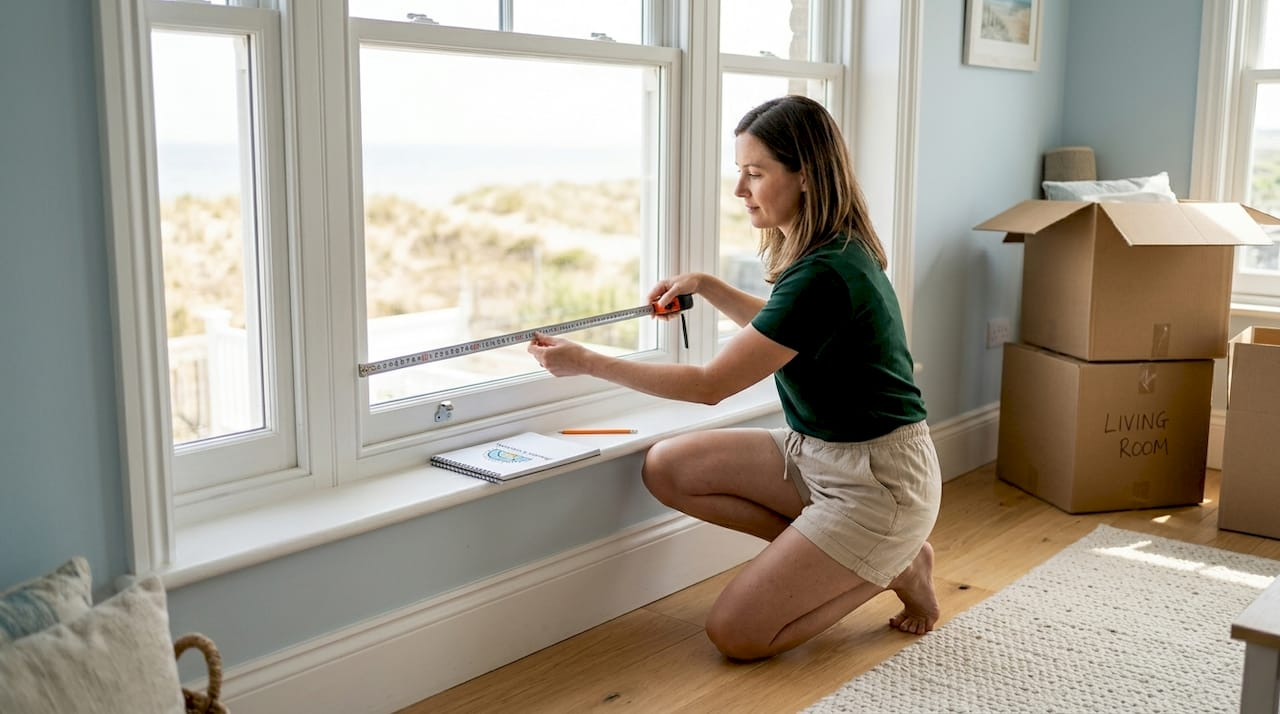
Knowing how to measure windows for treatments is the process of taking exact width, height, and depth readings using a steel tape measure to produce a perfect fit for blinds, shades, curtains, or drapes. A fraction of an inch off in either direction can mean a treatment that gaps at the edges, binds inside the frame, or simply looks wrong on the wall. The good news is that the window treatment measuring process follows a clear, repeatable logic once you understand the two foundational concepts: inside mount and outside mount. This guide covers both hard treatments and fabric treatments, including special window shapes that most measurement guides skip entirely.
How to measure windows for inside mount treatments
Inside mount is the industry term for any treatment installed within the window frame opening itself. Blinds, cellular shades, and roller shades are the most common candidates. The result is a clean, built-in look that shows the full window trim.
The step-by-step process:
- Measure the width at three points inside the frame: top, middle, and bottom. Record all three numbers.
- Use the narrowest of the three width measurements. This prevents the treatment from binding against the frame. Manufacturers handle deductions for clearance during production, so give them your exact reading.
- Measure the height at three points: left side, center, and right side. Use the largest of these three numbers for height.
- Measure the depth of the window frame to confirm the treatment will fit without protruding. Most inside mount blinds require a minimum depth of 2 to 3 inches.
- Round every measurement to the nearest 1/8 inch. Round width down and height up to maintain fitting tolerance.
The three-point approach matters because older homes rarely have perfectly square frames. A window that measures 36 inches at the top may measure 35 and 7/8 inches at the middle. Using the narrowest width protects you from ordering a treatment that physically cannot slide into the opening.
| Tool | Purpose |
|---|---|
| Steel tape measure | Accurate straight-line readings without sagging |
| Pencil and notepad | Recording all three measurements per dimension |
| Ladder or step stool | Reaching the top of tall or high-set windows |
| Flashlight | Checking frame depth in recessed or dark openings |

Pro Tip: Mark each window with a label (e.g., “Living Room Left”) on your notepad before you start. Measurements from two windows that look identical often differ by 1/4 inch or more, and mixing them up is one of the most common DIY errors.
For light control, inside mount treatments with a tight fit leave small gaps at the frame edges. If you need a blackout result, consider outside mount instead, or add a side channel kit available from most blind manufacturers.
How to measure for outside mount blinds, shades, and curtains
Outside mount means the treatment attaches to the wall or window trim above and outside the frame opening. This method gives you more control over coverage, privacy, and the visual proportions of the window.

The core rule for outside mount: add overlap on all sides to reduce light gaps and improve privacy. For blinds and shades, a standard overlap of 2 to 4 inches on each side of the frame is the accepted practice. For curtains, the overlap is typically wider because the panels stack to the sides when open.
Key outside mount considerations:
- Measure the full width of the window frame from outer edge to outer edge, then add your desired overlap on both sides. A 30-inch frame with 3 inches of overlap on each side yields a 36-inch treatment width.
- For height, measure from your intended mounting point (above the trim or at the ceiling) down to the sill or floor. Use the largest height measurement if the floor or sill is uneven.
- Mount the hardware at least 2 to 4 inches above the top of the frame. This makes the window appear taller and keeps the treatment from blocking natural light when raised.
- On walls with uneven trim or textured surfaces, use a level when marking bracket positions to avoid a crooked installation.
- Curtain panels need additional width beyond the frame because fabric stacks when drawn open. Plan for the stacked fabric to clear the glass entirely so it does not block daylight.
| Factor | Inside mount | Outside mount |
|---|---|---|
| Light control | Moderate gaps at frame edges | Better coverage with overlap |
| Visual effect | Clean, built-in appearance | Window appears larger |
| Measurement basis | Narrowest width, largest height | Frame width plus overlap added |
| Best for | Newer, square frames | Uneven frames, maximum coverage |
Pro Tip: For outside mount on uneven walls, hold a straightedge or level across the mounting area before drilling. A 1/4-inch dip in the wall surface will tilt your bracket and throw off the entire treatment.
How to measure for fabric treatments like curtains and drapes
Fabric treatments follow a different measurement logic than hard treatments. The four measurements that determine curtain fit are rod width, drop length, header height, and full fabric length including hems. Getting all four right is what separates a polished result from a treatment that looks homemade in the wrong way.
Here is how to work through each measurement:
- Rod width: Measure between the two bracket mounting points, not the full rod length. This is your finished width. For accurate curtain measurements, the rod width determines how much fabric you need before applying a fullness multiplier.
- Drop length: Measure from the rod or the point where the ring or eyelet will sit, down to your desired endpoint. Floor-length drapes typically stop 1/2 inch above the floor to prevent dragging. Sill-length curtains end at or just below the sill.
- Header height: The header is the fabric above the rod pocket or pleat. Add 3 to 4 inches to the drop length to account for the header tape or pocket.
- Full fabric length: Add the header height, the drop length, and the hem allowance. A standard double-fold bottom hem adds 4 to 6 inches to the total cut length.
Fabric fullness is the measurement concept most DIYers underestimate. A flat panel hung across a window looks sparse. The standard fullness multiplier is 1.5x to 2.5x the rod width, depending on the style. Pinch pleat drapes typically use 2x to 2.5x fullness. Relaxed linen panels can work at 1.5x. Multiply your rod width by the chosen fullness factor to get the total fabric width needed across all panels.
Measuring at several height points is especially important for older homes where floors and sills are rarely level. A drop that measures 84 inches on the left side of a window may measure 83 and 3/4 inches on the right. Cut to the shorter measurement to avoid pooling on one side.
Pro Tip: Hang your rod and brackets before taking any fabric measurements. The rod position determines every other number. Measuring from a pencil mark on the wall introduces error if the bracket ends up sitting even slightly higher or lower than planned.
What to do with bay windows and unusual shapes
Bay windows, arched windows, and frames with built-in obstructions each require a modified approach to the standard window measurement guide.
- Bay windows: Measure each individual window section separately, including the angled side panels. Bay windows often have three or more distinct openings at different angles. Treating each section individually and then connecting them with a unified valance or cornice board produces the most polished result.
- Arched or curved windows: Measure the width at the base of the arch and the height from the base to the tallest point of the curve. Custom treatments for arched windows are almost always made to order, so precision here directly affects cost.
- Non-square frames: If your frame is out of square, measure the diagonal from corner to corner in both directions. If the two diagonal measurements differ by more than 1/4 inch, the frame is racked and inside mount treatments may not sit evenly.
- Windows with obstructions: Cranks, locks, and tilt latches on casement or double-hung windows can interfere with inside mount treatments. Measure the clearance from the obstruction to the frame edge before ordering.
- Multiple matching windows: Measure every window individually even when they appear identical. Manufacturing tolerances and settling in the structure mean that two windows side by side in the same room can differ by up to 1/2 inch.
Pro Tip: A laser level or digital angle finder from brands like Bosch or Stanley makes measuring bay window angles significantly more accurate than estimating by eye. The angle of each bay panel determines whether a standard or custom bracket will work.
Key takeaways
Accurate window treatment measurement depends on mount type, treatment style, and window shape, with inside mount requiring the narrowest width and outside mount requiring added overlap for full coverage.
| Point | Details |
|---|---|
| Inside mount width rule | Always use the narrowest of three width measurements to prevent binding. |
| Outside mount overlap | Add 2 to 4 inches on each side of the frame for privacy and light control. |
| Fabric fullness multiplier | Multiply rod width by 1.5x to 2.5x depending on curtain style and pleat type. |
| Measure every window separately | Even identical-looking windows can differ by up to 1/2 inch due to settling. |
| Round to 1/8 inch | Round width down and height up to maintain proper fitting tolerance. |
Why I always tell people to measure twice before ordering once
After working with homeowners and DIY enthusiasts on window treatments for years, the single most consistent mistake I see is treating measurement as a quick task rather than a deliberate one. People grab a fabric tape, take one reading per window, and order. Then the blind arrives and it is 3/8 of an inch too wide to sit inside the frame.
The three-point measurement method feels like overkill until the first time it saves you from a return shipment. I have seen windows in brand-new construction that varied by 1/4 inch from top to bottom. Older homes are far less predictable. Measuring each window separately, even when they look like copies of each other, is not caution for its own sake. It is the only way to account for what the house has actually done over time.
My other consistent advice: do not skip the depth check for inside mount treatments. A window with a shallow frame of less than 2 inches will not accommodate most cellular shades or wood blinds without the treatment protruding into the room. That detail is buried in product specs and easy to miss until the hardware arrives. Check the fabric and treatment tips from Beautifulwindowselgin before you finalize any order. The time you spend measuring carefully is always less than the time you spend managing a return.
— Marrion
Get the right fabric and expert guidance from Beautifulwindowselgin

Once your measurements are confirmed, the next step is selecting a fabric that performs as well as it looks. Beautifulwindowselgin carries a curated collection of designer drapery fabrics including jacquard satin, embroidered textiles, and upholstery-weight options sold by the yard, with nationwide shipping from Columbia, SC. For homeowners who want professional support before ordering, the window treatment measurement service provides expert guidance on dimensions, mount type, and fabric selection tailored to your specific windows. Custom drapery appointments are also available for those who prefer a fully guided process from measurement through installation.
FAQ
What tools do I need to measure windows for treatments?
A steel tape measure is the primary tool because it holds a straight line without sagging, unlike fabric or vinyl alternatives. You also need a pencil, notepad, and a ladder for high windows.
Should I measure inside or outside the window frame?
The answer depends on your mount type. Inside mount measurements are taken within the frame opening; outside mount measurements span the full frame plus your desired overlap on each side.
How much fabric do I need for curtain panels?
Multiply your rod width by a fullness factor of 1.5x to 2.5x depending on the pleat style. A 60-inch rod with 2x fullness requires 120 inches of total fabric width across all panels.
Do manufacturers adjust my measurements for inside mount blinds?
Yes. Manufacturers make deductions from your exact measurements to allow for clearance. Submit your actual window dimensions without making your own adjustments.
How do I measure a bay window for treatments?
Measure each individual section of the bay window separately, recording width and height for each panel. Connect the treatments with a shared valance or cornice board for a unified appearance.
Recommended
- How to measure windows for curtains accurately – Fabric Store in Columbia, SC | Drapery Making Services
- Window treatment checklist: A guide for stylish home – Fabric Store in Columbia, SC | Drapery Making Services
- Window treatment installation guide: DIY steps for a polished home – Fabric Store in Columbia, SC | Drapery Making Services
- Window Treatment Measurement—Beautiful Windows Elgin – Fabric Store in Columbia, SC | Drapery Making Services