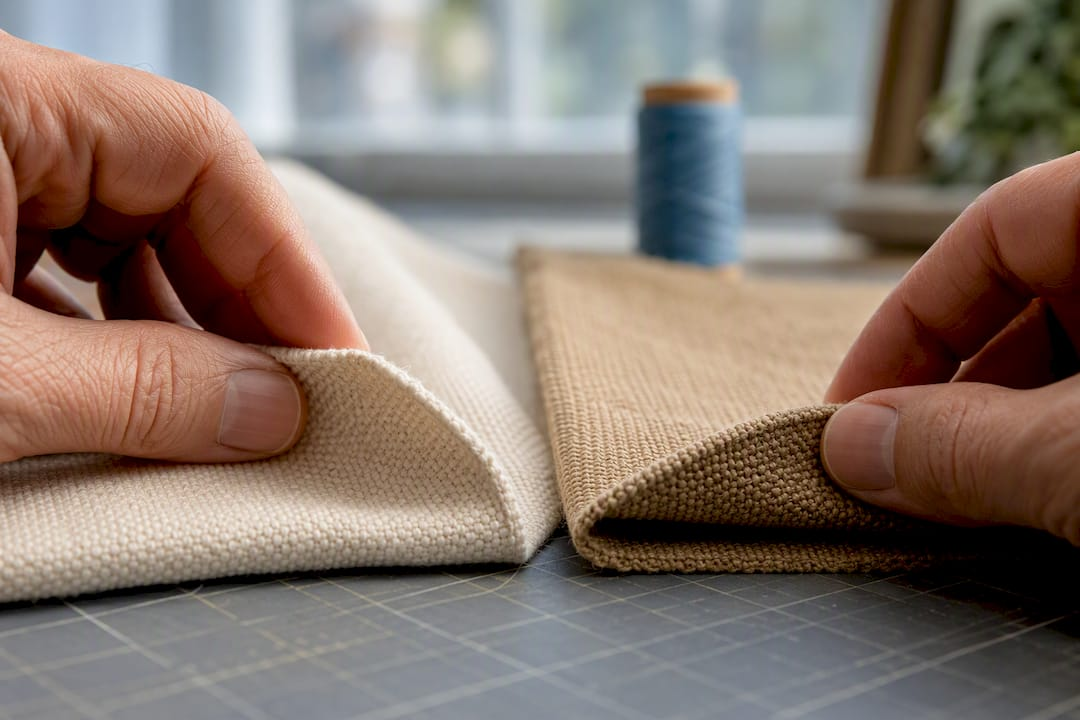
Duck cloth is a type of canvas, not a separate fabric. It refers specifically to a tightly woven, plain-weave cotton canvas graded by a numbered system, while “canvas” covers a much broader family of fibers and weights. Choose duck when a project demands structure and abrasion resistance, like bags or slipcovers, and choose a lighter, more open canvas when you want drape or a paintable surface. The sections below break down weight, weave, and sewing setup so you can match the right fabric to the right project.
TL;DR:
- Duck cloth is a heavier, tightly woven cotton fabric with a specific numbered grading system from #1 to #12 that indicates weight and strength.
- The main difference between canvas and duck lies in weave density and weight, with duck being more tightly woven and generally heavier and stiffer.
- For projects requiring structure and abrasion resistance, choose higher-grade duck (#8 to #1), while softer, drapable canvas suits lighter, flowing applications.
- Proper sewing of heavy canvas and duck demands strong needles, preshrinking, and finishing techniques like using a walking foot, to prevent damage and fraying.
- Confirm fabric specs such as weight (oz/yd²), fill type, and finish before ordering, and always consider ordering samples to assess stiffness and weight suitability.
Table of Contents
- Canvas vs Duck Cloth: What Canvas Actually Covers
- What Cotton Duck Really Is (and Why It’s Graded by Number)
- Weave, Weight, and Price: Where the Two Fabrics Really Diverge
- Choosing the Right Weight and Finish for Your Project
- Sewing Heavy Canvas and Duck Without Fighting Your Machine
- An Expert Note From Beautiful Windows Elgin
- The Dutch Sailcloth That Became a Household Staple
- Why Most Buying Guides Get the Canvas Question Backwards
- Order Fabric Samples and Get Expert Drapery Help
- Sources
Canvas vs Duck Cloth: What Canvas Actually Covers
Canvas is the umbrella term. It describes any sturdy, plain or basket-woven fabric made from cotton, linen, synthetic fibers, or blends of the three, and that range is exactly why “canvas” alone doesn’t tell you much about what you’re buying. The category spans from featherweight artist canvas you’d stretch over a frame to industrial-grade material tough enough for truck covers.
Weight is where the real information lives, expressed in ounces per square yard (oz/yd²). Canvas weights typically run from 4 to 24 oz, and that number tells you more about a bolt of fabric than its fiber content ever will. A few common applications by weight class:
- 4-7 oz: artist canvas, lightweight apparel, and craft projects
- 7-12 oz: tote bags, aprons, and light home décor
- 12-18 oz: upholstery, slipcovers, and structured bags
- 18-24 oz: tarps, industrial covers, and heavy-duty outdoor gear
Synthetic blends and coated canvas show up frequently in outdoor and marine goods, since they resist water and mildew better than untreated cotton. Read the oz/yd² spec before you read the fiber content. It’s the number that predicts how the fabric will actually behave on your machine and in your finished project.
What Cotton Duck Really Is (and Why It’s Graded by Number)
Cotton duck is a heavy, plain-woven cotton fabric, and its name comes from the Dutch word “doek,” meaning cloth. Duck is more tightly woven than standard canvas, which gives it a smoother surface and better resistance to fraying and abrasion. MasterClass notes that this tighter construction also makes duck stiffer, which is exactly why it holds shape in bags, awnings, and upholstery where floppy fabric simply won’t do the job.
Duck uses its own grading scale, numbered #1 through #12. The lower the number, the heavier the fabric:
- #12 duck: suited to lightweight bags and craft work
- #10 duck: 12 to 15 oz, common for artist canvas and furniture slipcovers
- #8 duck: around 18 oz, used for backpacks, tents, and sandbags
- #1 duck: the heaviest grade, reserved for industrial and marine gear
Construction matters as much as weight. Single-fill duck weaves one warp yarn against a heavier weft yarn, producing a fabric with visible texture. Double-fill, sometimes called Army duck, pairs two yarns together in the warp for a tighter, smoother surface with noticeably better abrasion resistance. That distinction explains why two fabrics labeled “12 oz duck” can still feel and wear differently.
Weave, Weight, and Price: Where the Two Fabrics Really Diverge
The differences between canvas and duck cloth come down to four practical factors: weave density, weight, finish, and cost. Get these right and the rest of your project decisions get a lot easier.

Weave density is the biggest structural difference. Duck’s tighter plain weave packs more yarn into the same space than a typical canvas weave, and that density is what gives duck its smoother hand and higher resistance to snagging and wear. Technical research on textile construction confirms that how tightly yarns pack together directly affects a fabric’s porosity, stiffness, and durability, which is exactly the mechanism behind duck’s reputation as the tougher option.
Weight determines what a fabric can physically do. A 7 oz duck drapes and folds like a heavy cotton shirt; a 24 oz industrial canvas behaves more like stiff cardboard until it’s broken in. Matching weight to project isn’t optional; it’s the difference between a tote bag that holds its shape and one that sags the first time you load it with groceries.
Finish changes performance more than most DIYers expect. Neither untreated canvas nor untreated cotton duck is inherently waterproof; both absorb moisture unless treated. Waxed finishes, solution-dyed polyester canvas, and marine-grade coatings all extend outdoor life, and choosing the right one depends entirely on whether the finished piece will sit indoors or take weather.
Price tracks weight and finish closely. Lightweight canvas often runs a few dollars per yard, while heavy-duty duck with a specialty finish, marine treatments in particular, can run several times that. Heavier duck costs more partly because it uses more raw cotton per yard and partly because tighter, double-fill weaves take longer to produce.
Quick reference: Duck’s grading runs #12 (about 7 oz, light bags) down to #1 (the heaviest industrial grade), while general canvas simply spans roughly 4 to 24 oz/yd² with no numbered system at all.
If you’re shopping for upholstery-weight fabric, understanding this weight-to-durability relationship will save you from ordering something either too flimsy or too stiff to work with on a home machine.
Choosing the Right Weight and Finish for Your Project
Match the fabric to the job before you match it to the color. Here’s how weight and grading typically line up with common projects:
- Lightweight craft and apparel (7-10 oz, roughly #12-#10 duck): tote bags, aprons, and light garment work where you want body without stiffness.
- Bags and upholstery (10-14 oz, around #10 duck): the most versatile range for home sewing. A 12 oz single-fill duck is commonly recommended for slipcovers and structured bags because it balances stiffness with sewability.
- Heavy-duty and industrial (18 oz and up, #8-#1): outdoor gear, awnings, and anything that needs to survive years of abrasion and weather.
Finish decisions matter just as much as weight. Waxed canvas suits bags and outdoor gear where you want a hand-applied, breathable water resistance. Solution-dyed polyester canvas holds color better in direct sun and resists mildew, which makes it a common choice for outdoor cushions. Marine-grade options add UV stabilizers on top of water resistance for boat covers and awnings.
Before you order online, confirm four specs on the product page: oz/yd², fill type (single or double), whether it’s preshrunk, and the roll width. Skipping any of these is how DIYers end up with a yard of fabric that shrinks two inches after the first wash.
Pro Tip: Order a swatch before committing to yardage, especially with duck. Photos rarely capture how stiff a #10 duck actually feels compared to a 10 oz standard canvas, and that stiffness is exactly what determines whether your bag stands up on its own or slouches.

Sewing Heavy Canvas and Duck Without Fighting Your Machine
Heavier weights punish underprepared sewing setups. A domestic machine with the wrong needle will skip stitches, break thread, or bend trying to punch through four layers of 12 oz duck at a seam intersection.
Start with the needle. Retailers commonly recommend heavy-duty needles in the size 16 to 18 range (100/16 to 120/18) for anything above 10 oz, paired with a heavy-duty or upholstery-weight thread that won’t shred under tension.
- Preshrink cotton duck and canvas before cutting; both fabrics shrink noticeably on the first wash.
- Use a walking foot when topstitching or crossing bulky seams, since it feeds top and bottom layers evenly.
- Lengthen your stitch to around 3 to 3.5mm; short stitches perforate heavy fabric and weaken the seam.
- Finish raw edges with a zigzag or serger pass to stop fraying, especially on single-fill duck.
- Add wax-based waterproofing by hand after sewing, not before; running waxed fabric through a machine gums up the needle and feed dogs.
Choosing between a domestic and industrial machine also comes down to weight, a point covered well in guidance on fabric weight and equipment needs from sewing equipment specialists.
An Expert Note From Beautiful Windows Elgin
Marrion, who covers fabric selection for Beautifulwindowselgin, has watched clients agonize over canvas versus duck for everything from dining chair seats to boat cushions. The pattern holds: structure wins projects, drape wins comfort.
Beautifulwindowselgin backs that guidance with a curated selection of upholstery-weight and decor fabrics, custom drapery services with hands-on design consultations, and nationwide shipping for orders placed online. In one recent drapery consultation, a client choosing a fabric for a bay-window seat cushion moved from a lightweight decor canvas to a 12 oz duck once she felt how much better it held a tailored, boxed edge.
The Dutch Sailcloth That Became a Household Staple
Canvas has roots stretching back to ancient Egypt and Greece, where woven hemp and flax fabrics served as sailcloth strong enough to catch wind without tearing apart. The word itself derives from the Latin “cannabis,” a nod to hemp’s early dominance as the fiber of choice before cotton took over in later centuries.
Duck cloth’s story is narrower but just as maritime. The name traces to the Dutch word “doek,” and Dutch weavers were producing this tightly woven cotton for sailcloth and work garments by the 17th century. Sailors needed fabric that resisted wind, salt spray, and constant friction against rigging, and duck’s tight plain weave delivered exactly that. The fabric crossed into American manufacturing during the Industrial Revolution, where cotton mills scaled up production for tents, wagon covers, and military uniforms.
By the 20th century, canvas and duck had split into distinct commercial identities even as their technical relationship stayed the same. Canvas became the generic term stocked by every fabric retailer, while duck kept its numbered grading system as a holdover from industrial specification sheets used by mills supplying the military and maritime trades. That grading system, oddly, is one of the few pieces of 19th-century textile bureaucracy that survived essentially unchanged into today’s retail fabric listings. Modern manufacturing added synthetic blends and specialty coatings, but the core weave structures that sailors relied on centuries ago are still what you’re buying off the bolt today.
Why Most Buying Guides Get the Canvas Question Backwards
Most comparison guides frame canvas and duck as a binary choice, as if you’re picking between two competing products. That framing misses the point. Duck is a subset of canvas, and treating them as parallel options leads people to ask the wrong question. The right question isn’t “canvas or duck?” It’s “how much structure does this project actually need?”
Conventional advice also overweights fiber content and underweights weave density. Plenty of buyers fixate on cotton percentage while ignoring that a single-fill 10 oz duck and a double-fill 10 oz duck perform noticeably differently under stress. The weave construction, not just the weight number, decides how a fabric wears.
If there’s one priority for a first-time buyer, it’s this: figure out whether your project needs to hold a shape or fall into one. A bag, a slipcover, or a cushion boxing needs duck’s stiffness. A drapery panel, a soft accent pillow, or anything meant to flow needs a lighter, more open canvas. Everything else, needle size, finish, preshrinking, is downstream of that one decision.
— Marrion
Order Fabric Samples and Get Expert Drapery Help
Reading specs online only gets you so far; feeling the actual weight and hand of a fabric is what settles most canvas-versus-duck decisions. Beautifulwindowselgin carries a curated range of upholstery and décor-weight fabrics by the yard, from structured options suited to slipcovers and bench cushions to softer canvas better suited for drapery and accent pieces.

Beyond fabric sales, Beautifulwindowselgin offers custom drapery and curtain services, including design consultations that help match fabric weight to your specific window treatment or upholstery project. Every order ships nationwide, and fabric samples are available so you can check weight, weave, and hand before committing to yardage. Start by browsing the upholstery and drapery fabric collection to compare weights side by side, or request a consultation if your project calls for professional measuring and installation guidance. If you’re still narrowing down yardage or finish questions, the fabric FAQ page covers sample ordering and purchasing details to help you order with confidence.
Sources
- Canvas
- What Is Canvas? Understanding How Canvas Is Made and the Difference Between Canvas and Duck – MasterClass
- 12oz Cotton Canvas Fabric – Natural 72" Width
- NIST technical paper (textile/weave effects)